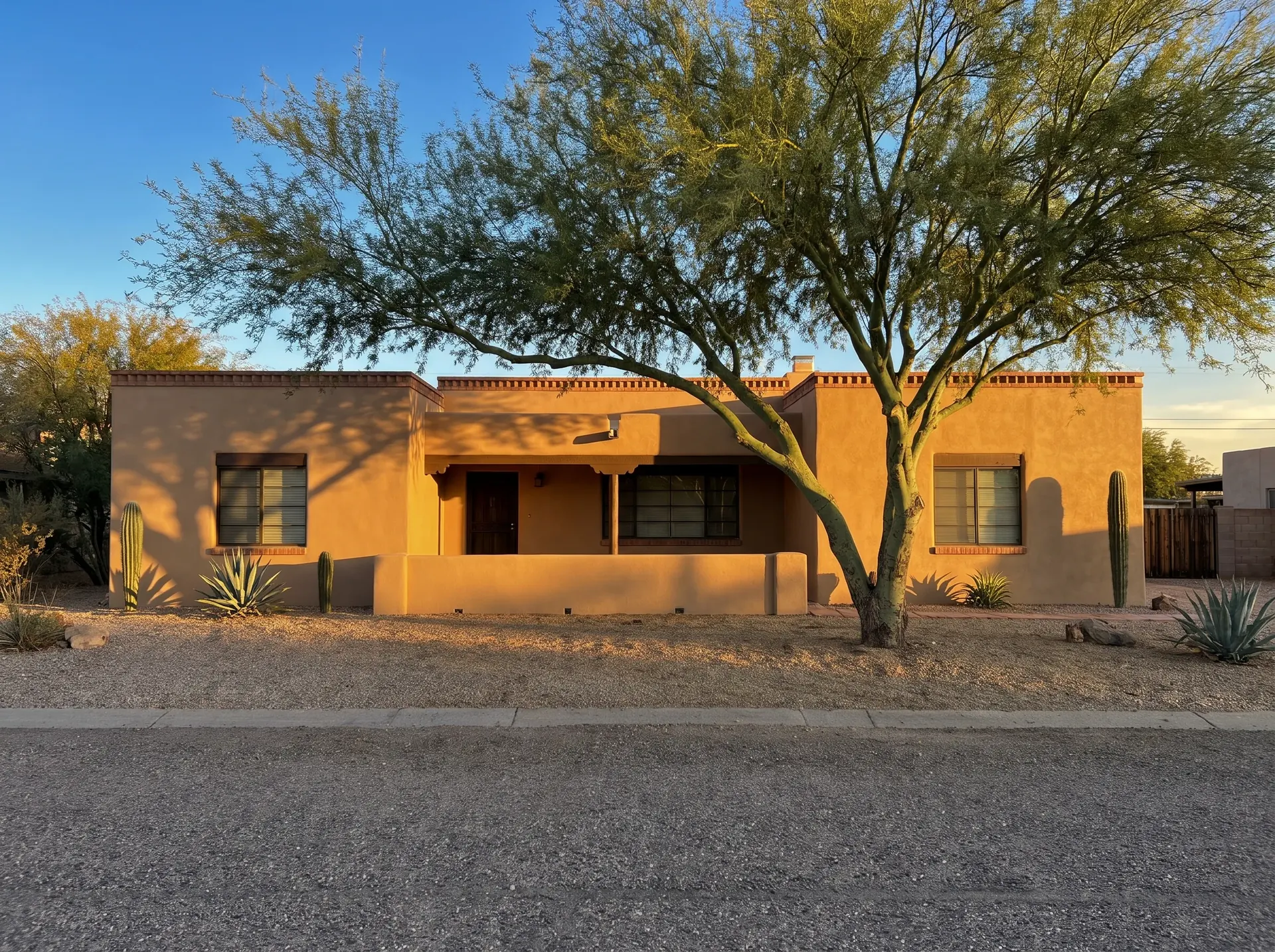
Re-Stucco
A new finish over walls that are still sound, or a tear off where the old system has failed, so the whole home reads as one surface again.
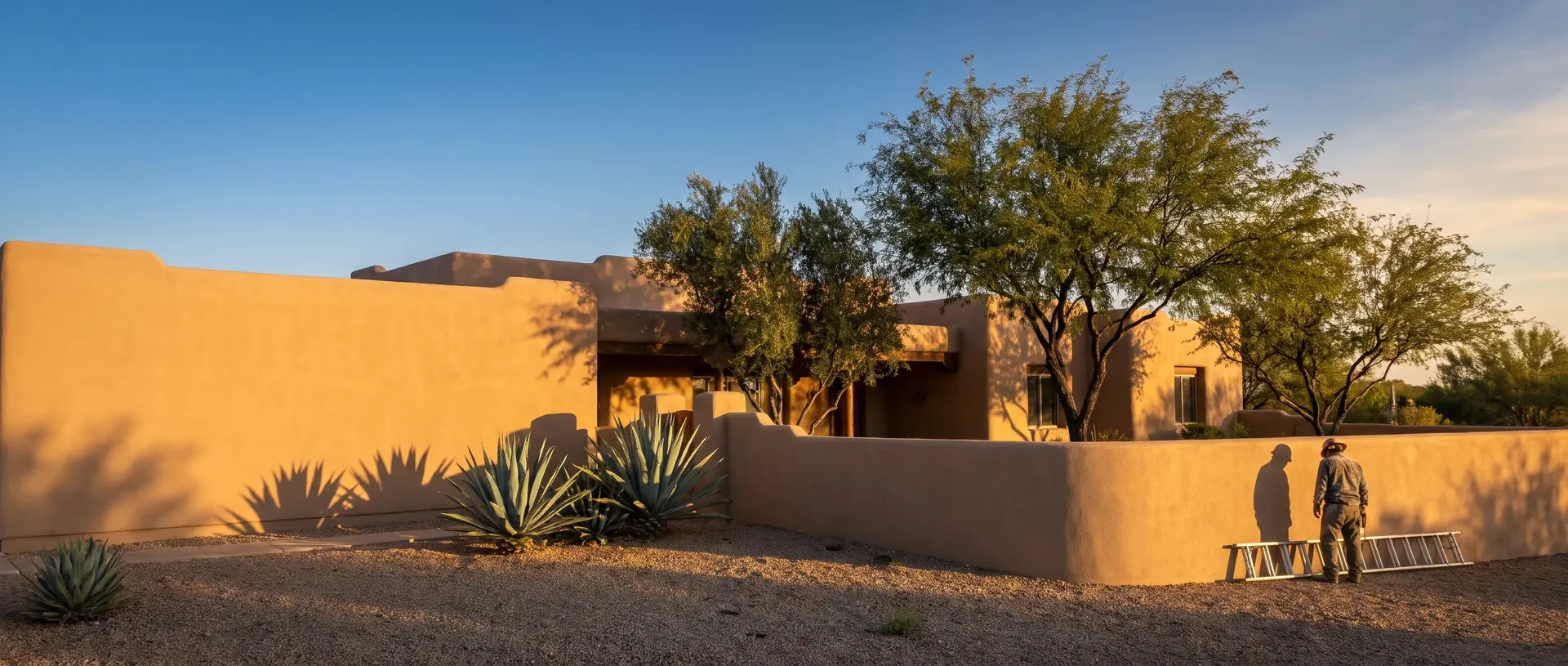
A repair is the smallest of your options and often the right one, as long as the wall around it is healthy and whatever caused the damage has been dealt with.
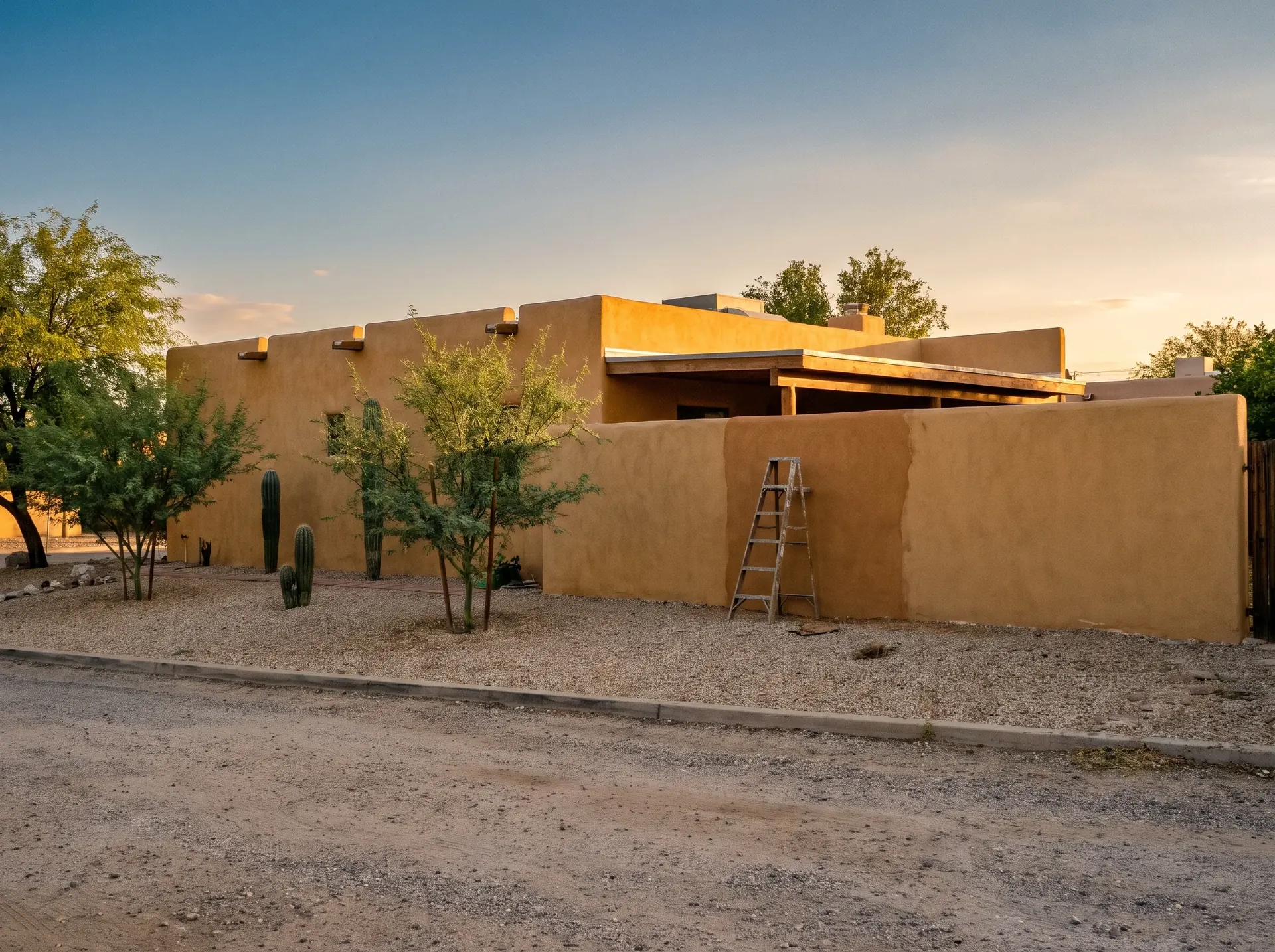
That is the first question to settle, because a patch on a failing wall is money spent twice. Stucco is a system: a cement or foam layer over lath or block, with a finish on top. A repair works when the damage is local and everything around it is still bonded and dry.
To find out, we tap the wall around the damage. Sound stucco gives a solid knock, and stucco that has let go of its backing sounds hollow. We check how far that sound spreads, look for rust or wet paper behind any opening, and look upward, because damage low on a Tucson wall often starts at a parapet cap or a roof transition well above it.
The damage itself usually has a plain explanation. A vehicle or a wheelbarrow hit the corner. A sprinkler has been wetting the same stretch for years. Someone cut in a line for a new air conditioner or an old satellite dish and sealed it badly. Pack rats or bees found a gap at a pipe or vent and made it bigger. Fix the wall without fixing that and the patch has a short life.
The damage is contained, the surrounding stucco sounds solid, there is no sign of a long running leak, and you can live with the patch as is or are happy to recoat that wall afterward.
If hollow areas run across a large part of the wall, re-stucco may cost less over time than repeated patching. If the real complaint is a faded finish, a recoat does more than any repair. And if a crack keeps returning or a wall stays damp, treat that as a crack or water problem first.
New material over old rarely matches on its own, because your finish has spent years fading in the sun. We blend texture carefully and get as close as the wall allows, but on an old finish the honest way to lose a patch completely is to recoat the whole elevation from corner to corner. We will tell you which to expect before we start.
Corners struck by vehicles or equipment, chipped edges at garage doors, gate strikes, and holes left by removed fixtures. We cut back to sound material with clean edges, so the new work has something solid to bond to.
Areas where the finish or base has let go, whether from age, moisture, or a coat that never bonded. We remove what has failed, replace rusted lath and torn paper where we find it, and rebuild in layers.
Old repairs that have cracked around their edges, smeared caulk on walls, and gaps around pipes, vents and weep screeds that pack rats and bees use as doors. We close them properly and build them back in stucco.
We sound out the wall around the problem, check the parapet or roof transition above it, and look at the base of the wall below, including irrigation and the weep screed.
We tell you what caused the damage, how far it goes, and whether a repair is the sensible answer or a smaller part of a larger choice.
What gets cut back, how it gets rebuilt, how the finish will be handled, and what you can expect the patch to look like against older stucco.
We look at the finish you have, whether sand, dash, lace or smooth, and whether it is cement or acrylic, so the repair uses compatible material and a texture that suits the wall.
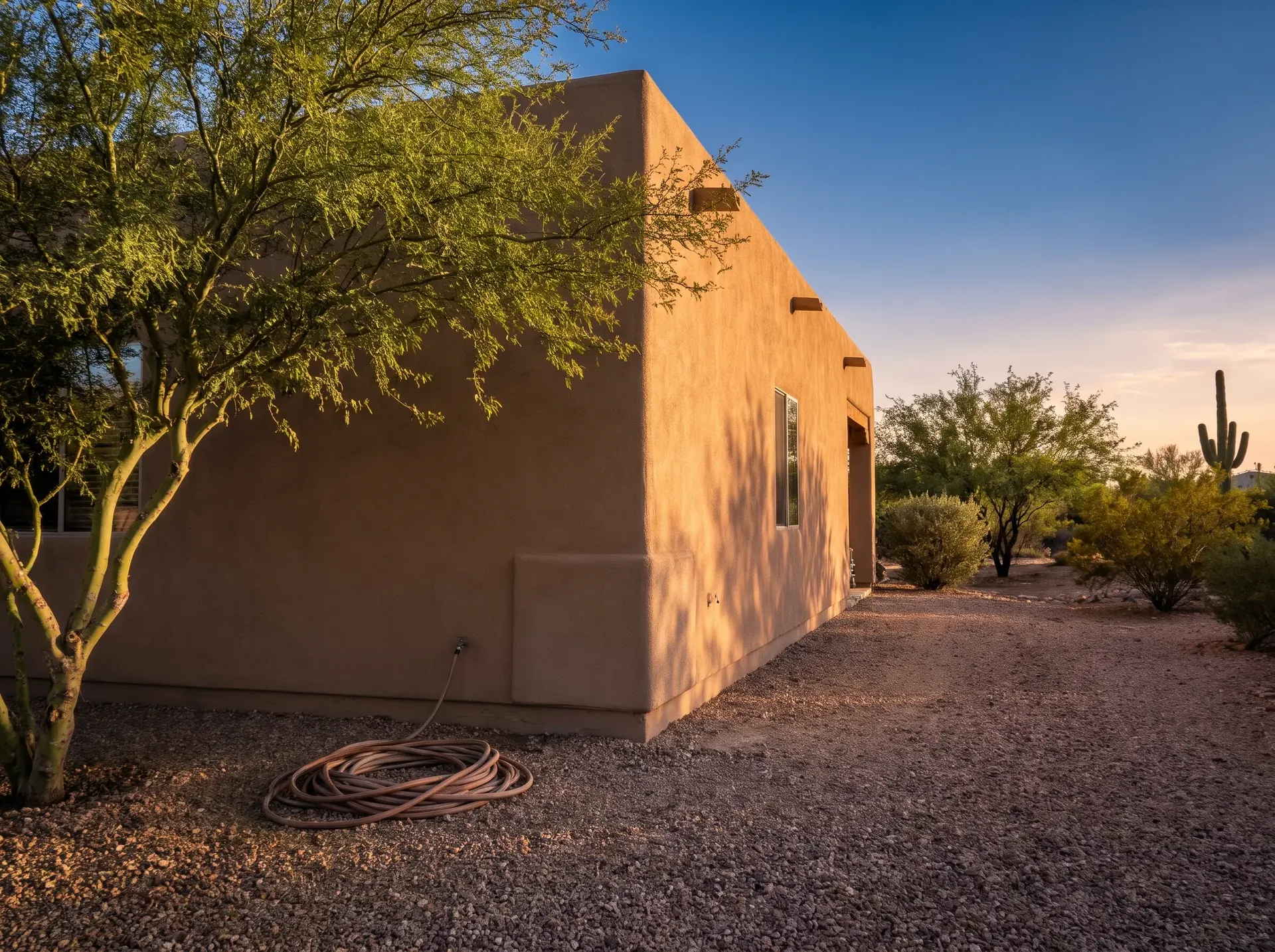
We identify what damaged the wall and sort it out first, or tell you who should, such as a roofer or the person who looks after your irrigation.
We remove loose material to a clean edge. A square cut patch holds up better and blends better than a thin skim feathered over weak stucco.
On frame walls we replace damaged lath and weather barrier and lap the new paper correctly. On block we clean back the surface and prepare it for bond.
Base coats go on in stages, kept damp while they cure. In the Tucson heat we plan around the sun, because cement dried too fast is weak and prone to cracking.
The final coat is worked to suit the surrounding texture. Where a whole elevation will be recoated, we leave the patch ready for that coat instead.
We look at the repair together in good light and go over how it may change as it cures, and whether a recoat later would be worth it.
Because we will tell you when a patch is enough. Plenty of Tucson walls have one or two honest problems and many good years left, and a sound wall with a neat repair is a better outcome than a full exterior you did not need.
Because we will also tell you when it is not. If tapping the wall turns up hollow areas well beyond the damage, you will hear that before you spend money on a repair that cannot last.
And because we read a repair as a clue. A failed section usually has a reason nearby: a cap, a sprinkler, a gap, a line of movement. Dealing with that is what keeps the same spot from being on your list again in a few years.
Send us a note about what happened and where it is on the home. We will take a look and tell you honestly whether a repair is the right size of job.
Yes, and most of it can be. Cracks, chips, holes and loose sections can all be cut back and rebuilt. The limit is not the repair itself but what is behind it. If the lath has rusted or the wall has been wet for years, the repair has to go deeper than the surface or it will not last.
The size of the area matters less than you might think. Access, height, whether the backing needs replacing, how complex the texture is, and whether the cause has to be fixed first all move the number. Many small repairs are mostly set up and finish work. We give you a written price after seeing the wall.
Usually, if the damage is local. A sound repair protects what is behind the wall and costs a fraction of a re-stucco. It stops being worth it when you are patching the same wall every couple of years, because that points to a cause the patches are not reaching.
A handy person can fill a small crack or a nail hole. Where it goes wrong is on anything larger, because stucco is layered, the paper and lath behind it have to be lapped to shed water, and a mismatched mix can crack away from the wall. Arizona also has rules on who may take on contracting work, which are worth checking before you hire anyone.
On a small, dry, low area, yes. Clean out loose material, dampen the edges and build it up in thin layers. Leave it alone if the area is high up, hollow over a wide spread, or wet behind, or if you can see torn paper or rusted lath. Those are signs the problem is not at the surface.
Patching without finding the cause. Feathering a thin skim over weak stucco instead of cutting back to something sound. Smearing caulk across the wall, which never takes texture or color. Working in full summer sun without keeping the patch damp. And burying the weep screed under the repair, which removes the way out for any water behind the wall.
Something is breaking the bond. The usual reasons are water behind the coat, a finish applied over a painted or dusty surface, a patch mix too strong for the old stucco around it, or repeated sprinkler wetting at the base of the wall. Keep replacing the piece and it will keep coming off, so we would look for the cause first.
We repair stucco in Tucson, Oro Valley, the Catalina Foothills, Marana, Sahuarita, Casas Adobes, Vail and Green Valley.
A new finish over walls that are still sound, or a tear off where the old system has failed, so the whole home reads as one surface again.
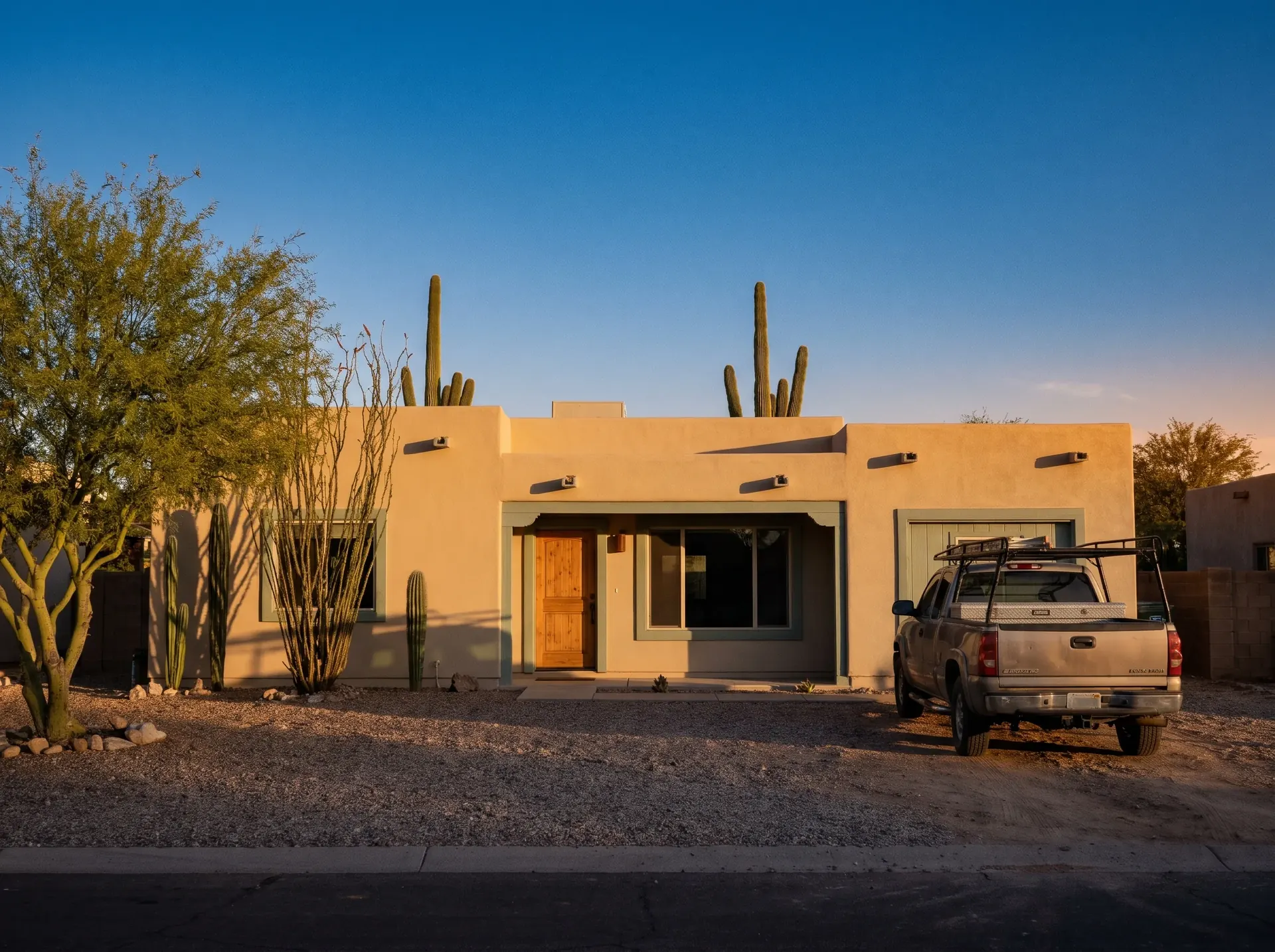
Color refreshes and full color changes using breathable coatings, with prep that deals with chalk and sun before anything goes on the wall.
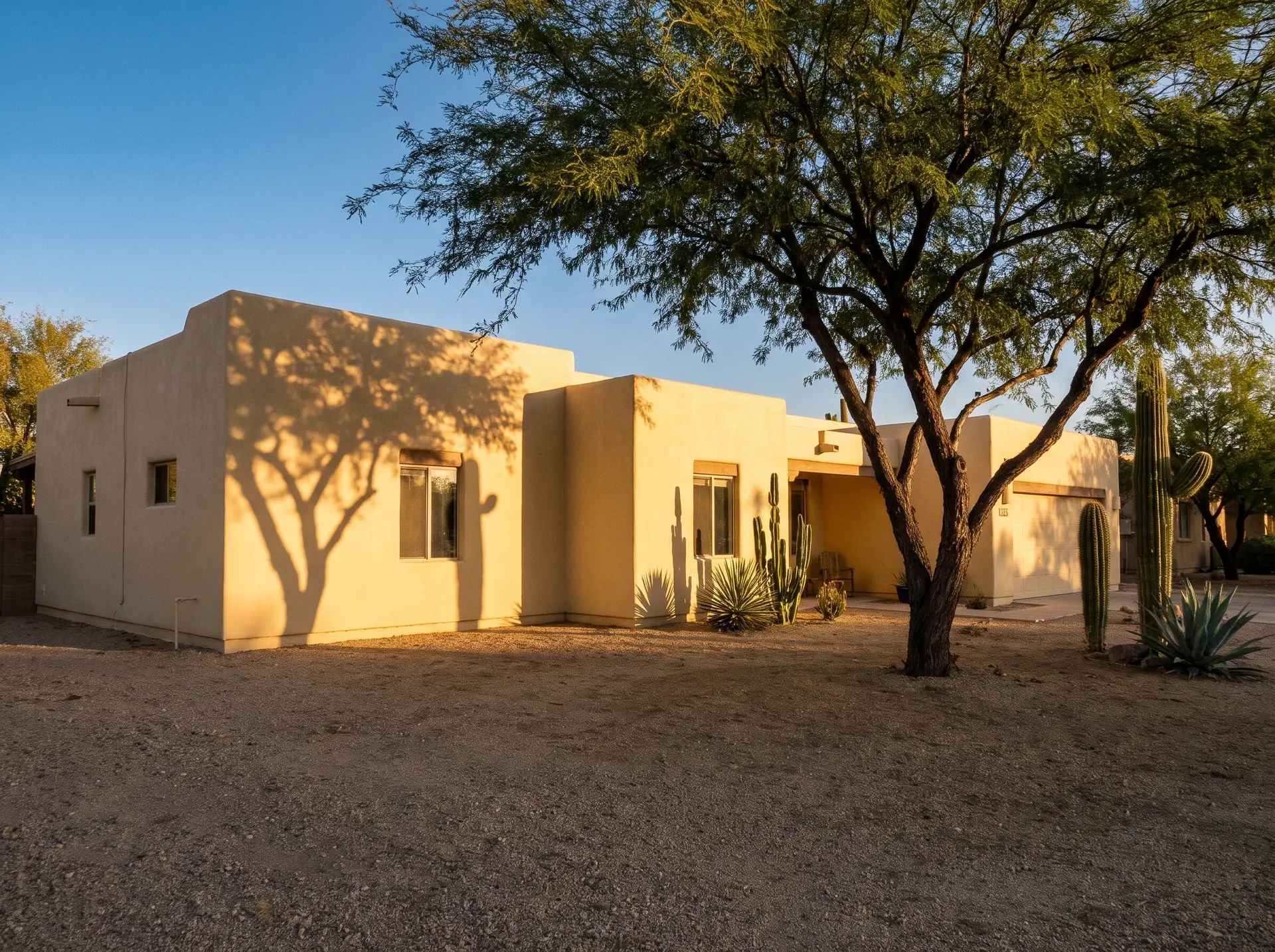
Thick, flexible coating systems for hairline cracking, along with a straight answer on the walls where they would trap moisture and do harm.
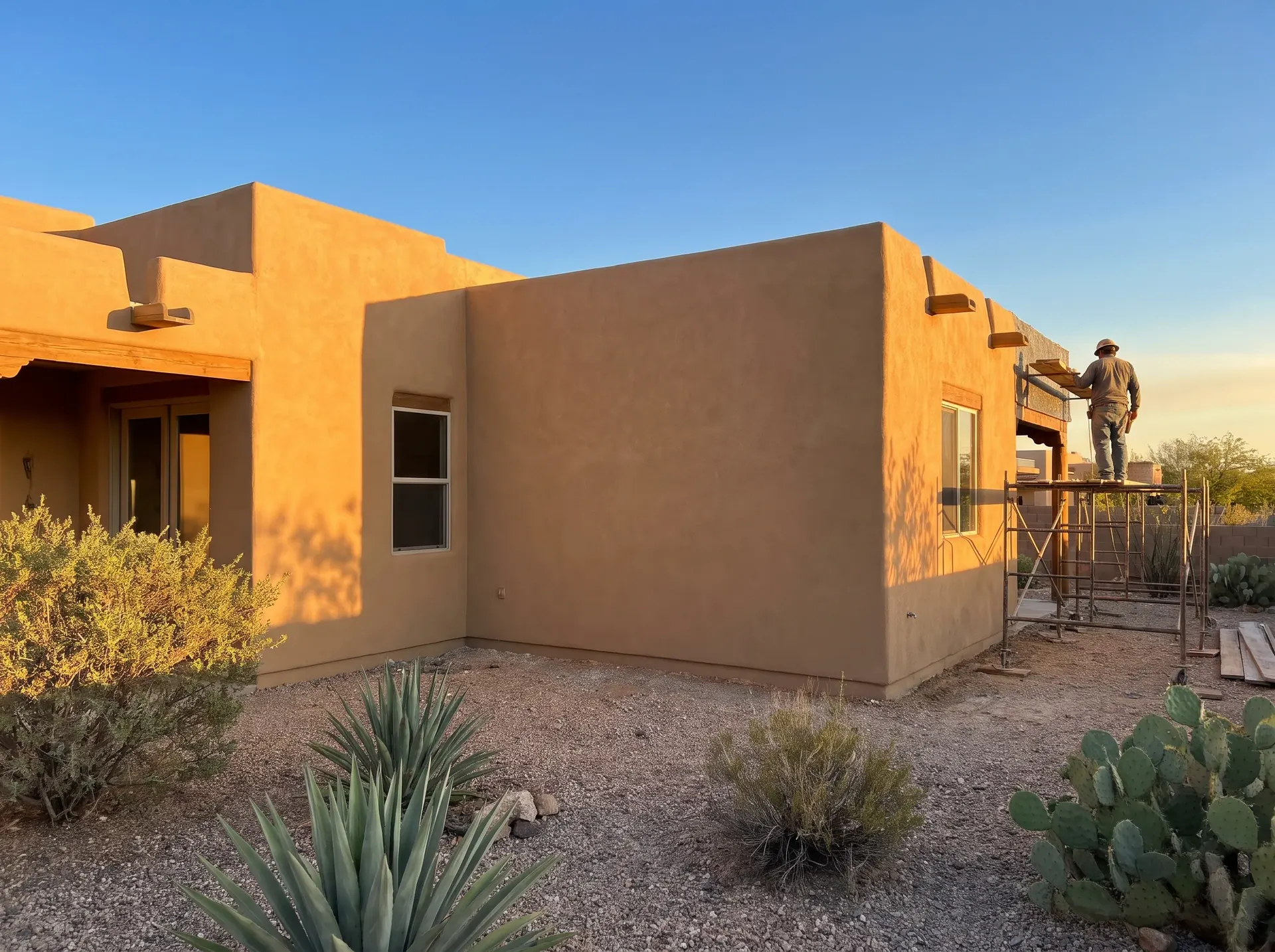
Lath, scratch, brown and finish coats for additions, garden walls and exterior upgrades on block or frame.
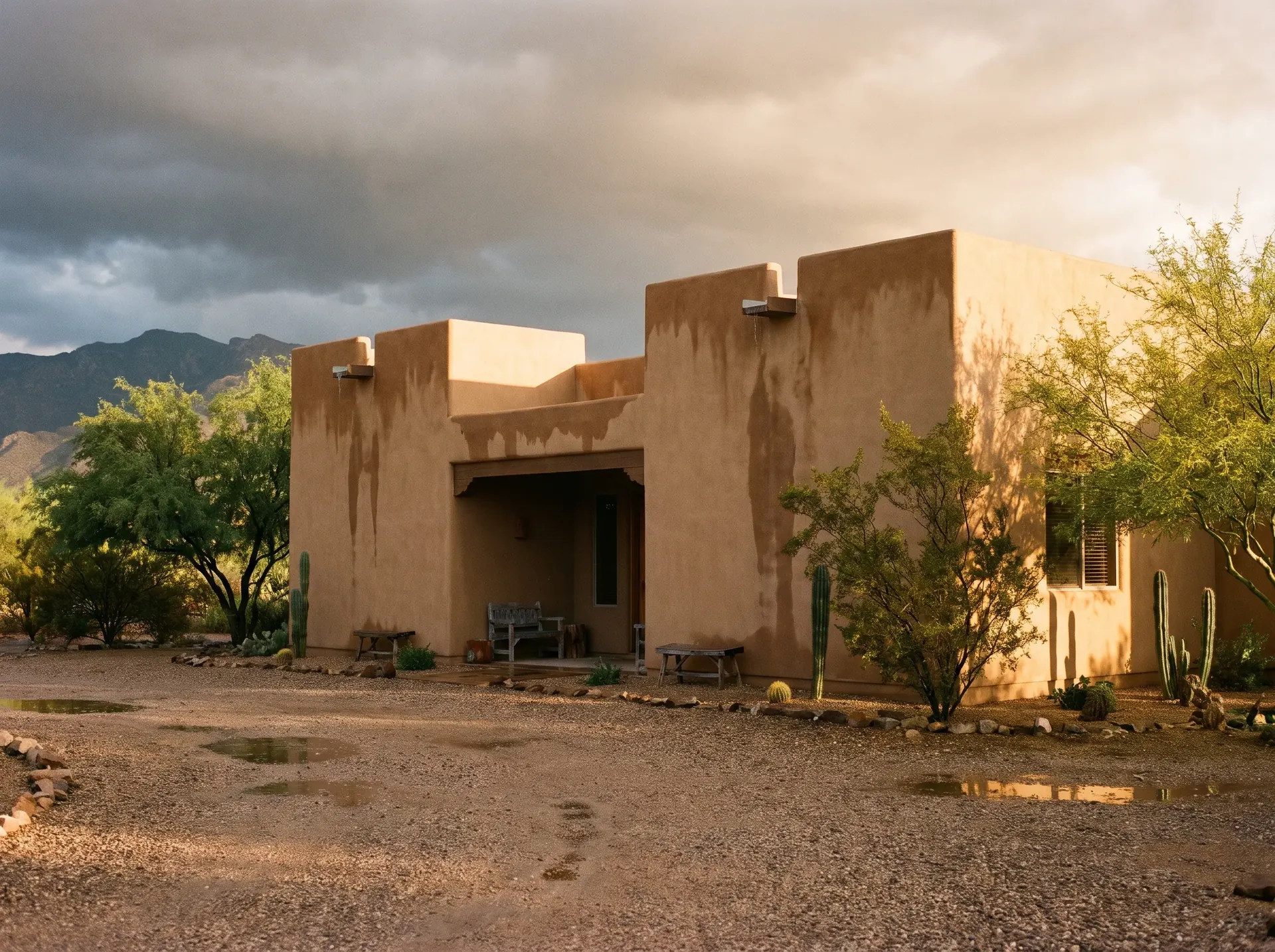
Moving cracks, parapet leaks and damp walls traced to their source and corrected from there outward.
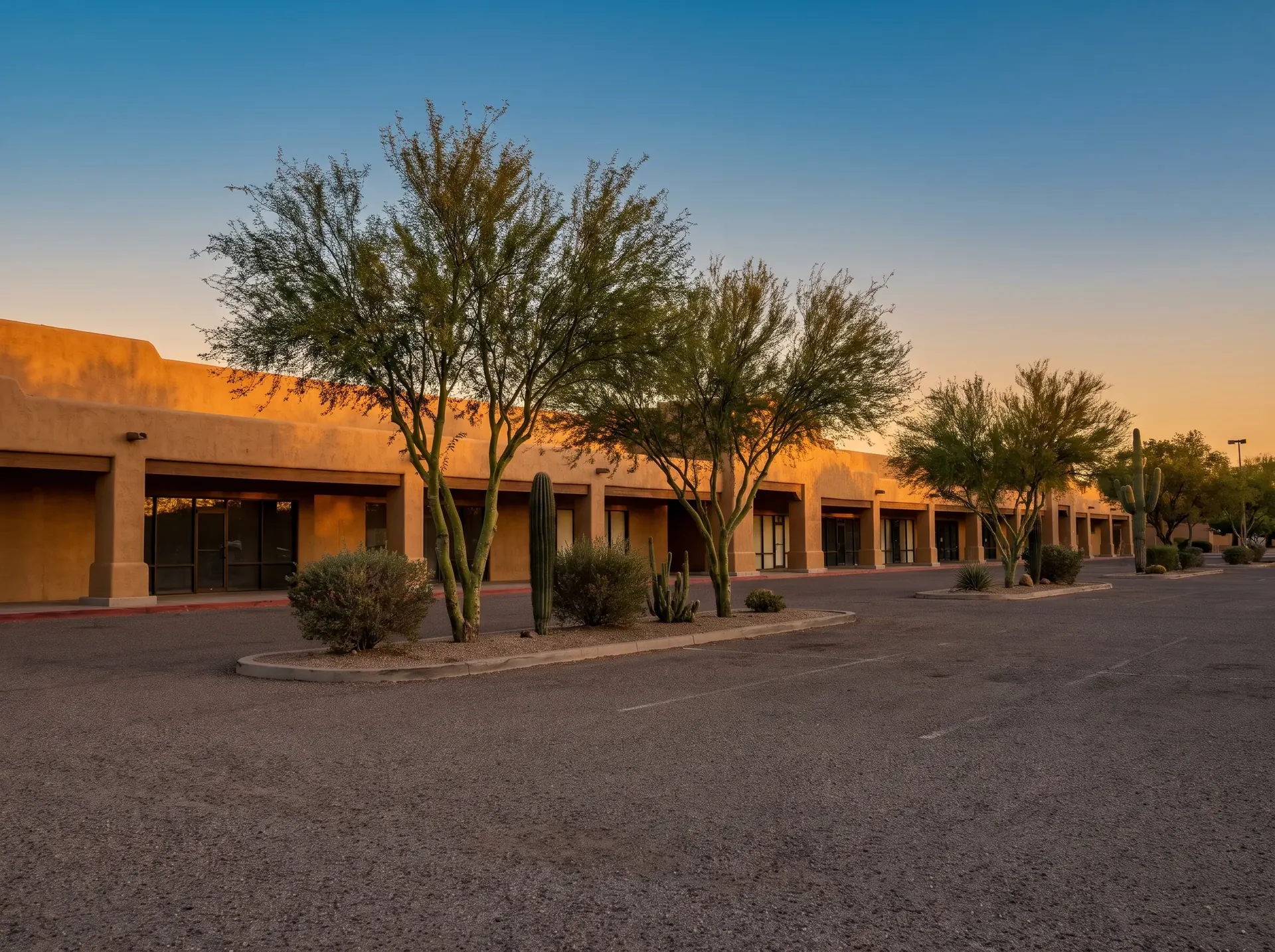
Shopping centers, offices, multifamily and HOA communities, with phasing and scope documents that suit a board or owner.
Tell us where the damage is and what you think caused it, and we will come out to check how far it goes.
Mon to Fri, 7am to 4pm. Saturday estimates by appointment.