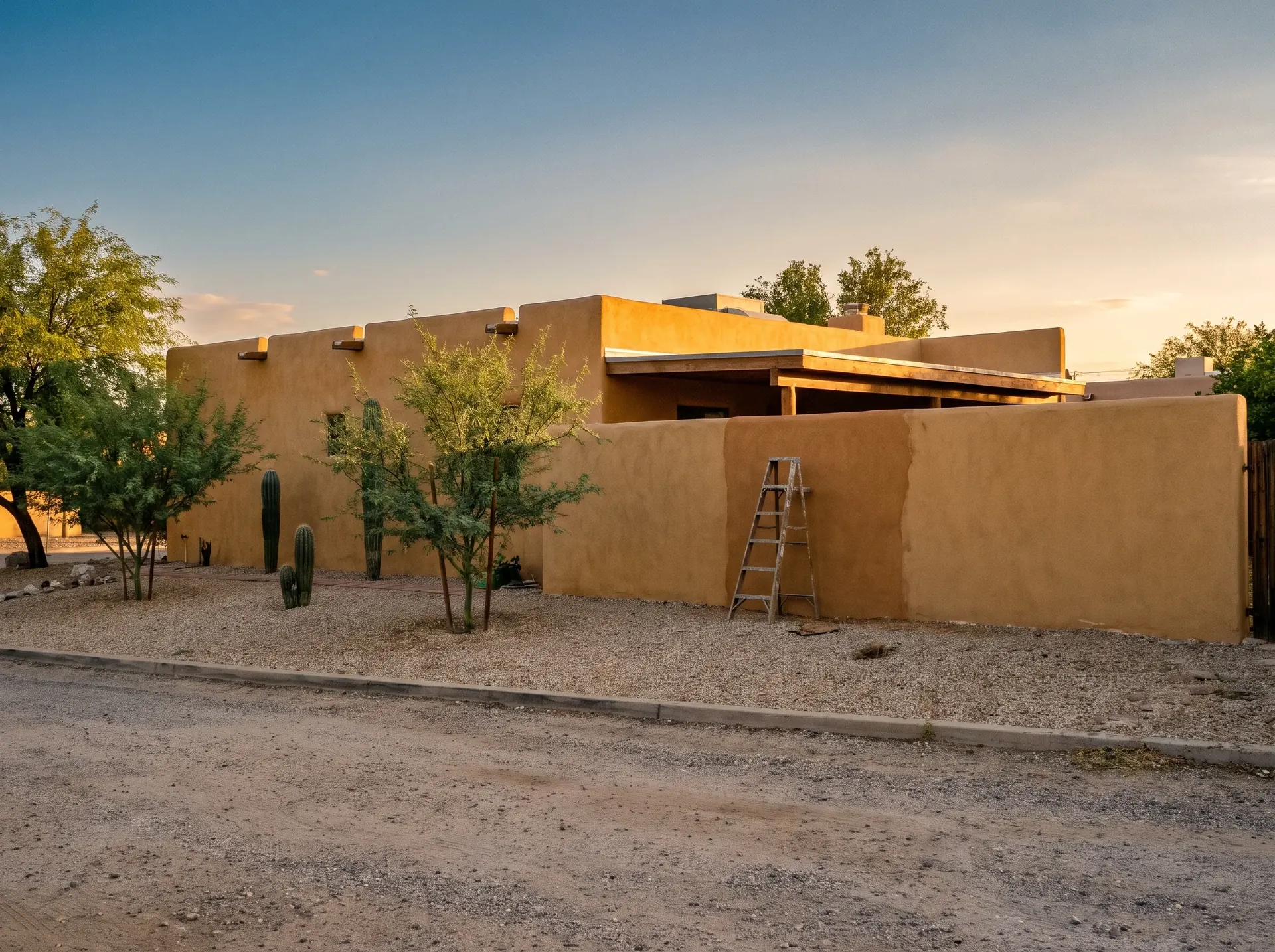
Stucco Repair
Damaged sections cut back to sound material, rebuilt in layers and blended into the finish, with the cause dealt with so the same spot does not fail twice.
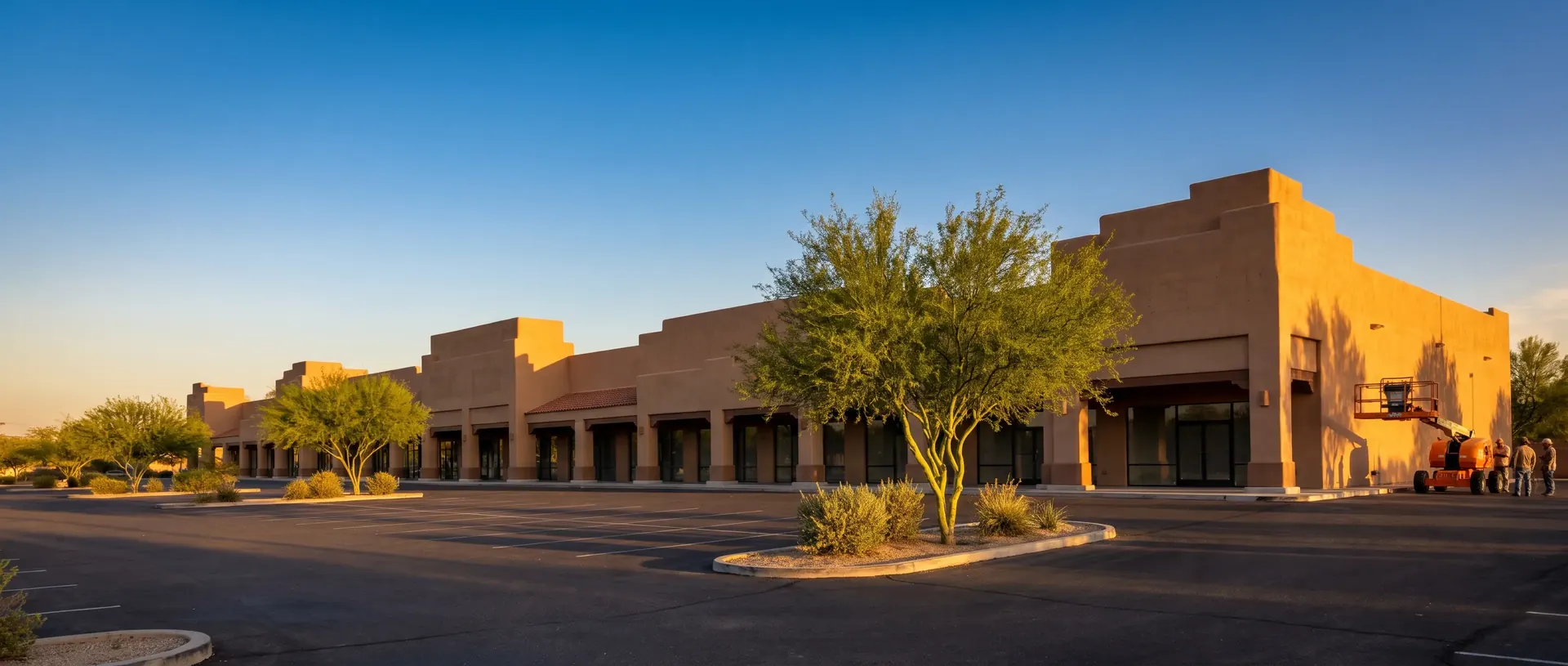
When several buildings or a board are involved, the choice between repair, recoat and re-stucco has to be justified to other people. We give you the evidence and the paperwork to do that.
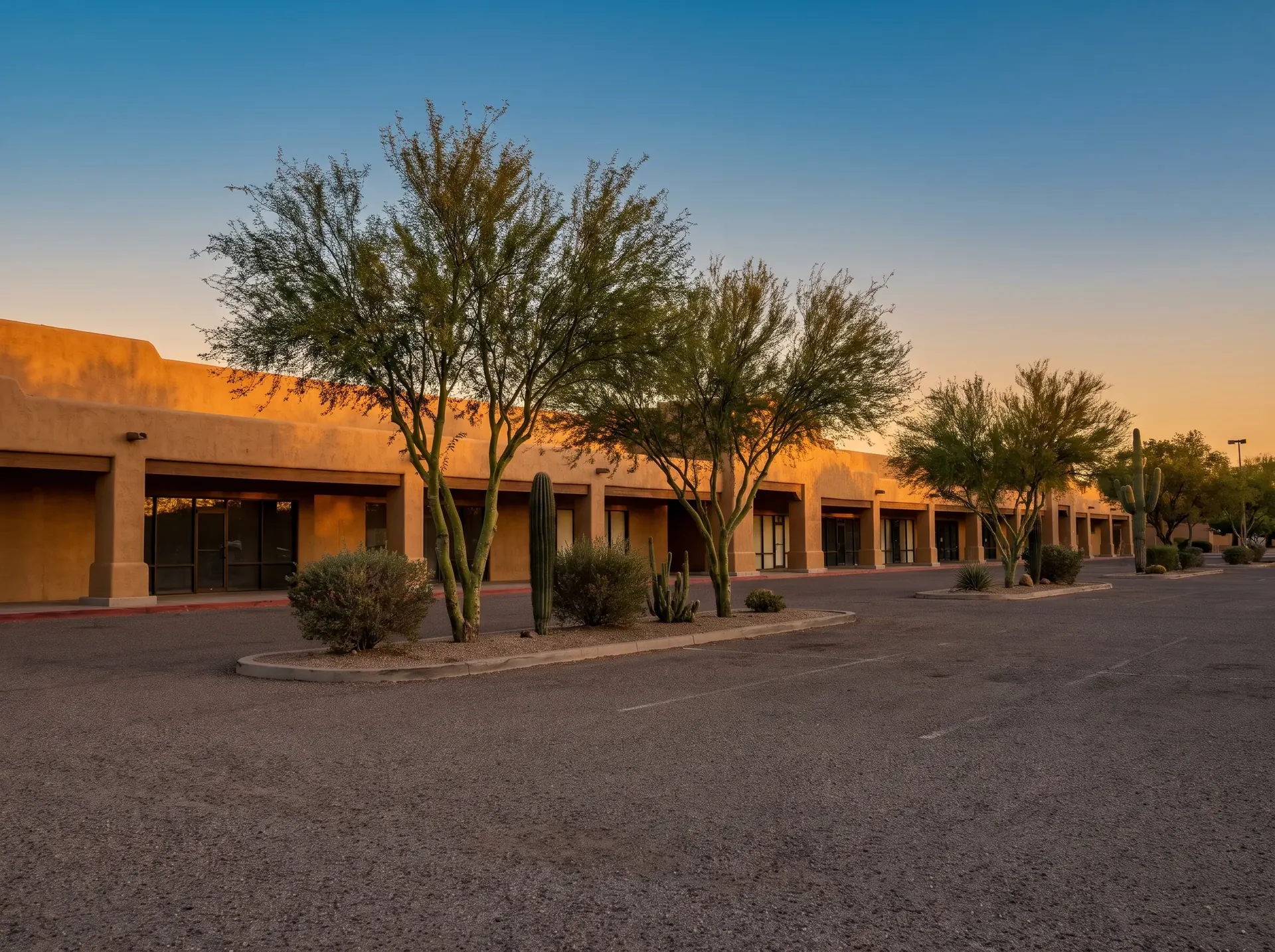
On a shopping center, an office or an HOA community, the question is rarely about one wall. You are deciding how much to do, in what order, and how to spread it across budget years, with a clear reason to give an owner or a board. A property can often be split into buildings that only need repair, buildings due for a recoat, and elevations that have actually failed. Treating all of them the same usually wastes money.
Larger Tucson properties share familiar weak points. Long parapet runs and flat roof transitions are the leading sources of leaks, and on multi tenant buildings the leak may show up in someone else's suite. West facing elevations chalk and fade well ahead of the rest. Parking lot sprinklers and landscape overspray damage the lower wall, while vehicles and carts take out corners. Then there are the unseen tenants, because pack rats and bees get into any building that has gaps at its penetrations.
So we begin with a condition review, elevation by elevation, and write it down. You get what we found, how urgent each item is, and options that you can price and compare, including the option of doing less now.
The finish still has useful life, damage is confined to known areas such as sprinkler lines or impact zones, and the budget this year is better spent elsewhere. We can repair and log the areas for next time.
The stucco is largely sound and the finish is at the end of its life, or the property needs one consistent look. A recoat makes sense as a planned maintenance item, and often pairs with parapet and sealant work.
Hollow areas and water damage are widespread, or older foam systems are failing in ways that recoating will not solve. Often this means phasing the worst elevations first and budgeting for the rest in later years.
Long storefront elevations, arcades, signage bands and parapets, with work planned around business hours, customer access and neighboring tenants. Damage to lower walls and corners is usually dealt with as part of a wider plan.
Apartment and condominium buildings with stairs, breezeways and many occupied units. We work out access and resident notices early, phase building by building, and keep routes to units clear during the work.
Community walls, entry monuments, shared buildings and homes under a shared palette. We prepare scope documents that a board can read and compare, and we can break the work into phases across more than one budget year.
We walk the property with the owner, manager or board member, and hear about tenant complaints, leak history and any past coating work you have records for.
Parapets and roof transitions, sounding of the walls, cracks, sealant, base conditions and pest openings. We note what we see by building and elevation, with photographs.
Repair, recoat and re-stucco, each priced as a scope where it applies, with our recommendation and what we would hold back to a later year.
Lifts or scaffolding, staging, parking impact, access for tenants and residents, working hours, and any permit or approval step that the scope may trigger.

We walk the property, sound the walls, check the parapets and write down what we find, building by building, with photos you can share.
You get a written scope suited to the way you buy: a single job, a set of options, or phases across more than one budget year.
We answer questions from owners and boards, and we can join a meeting. Colors, samples and submittals are prepared where your documents call for them.
We agree on a phase plan, working hours, staging and parking, then give you what you need for tenant or resident notices in good time.
Repairs and water sources first, then coatings or stucco, an elevation at a time. Long walls are scheduled around the sun, so no cold joints show in the finish.
A final walk with the owner or manager, a list of what was done by building and elevation, and notes on what to watch and when to review next.
Because you get something you can defend. A board member should be able to read our scope, understand why one building is getting a repair and another a recoat, and explain that to the neighbors without needing us in the room.
Because we would rather split the work honestly. Not every building on a property needs the same treatment, and we will not price the whole site for the worst elevation if a mix of repair and recoat would do the job.
And because exterior stucco is all we do. A single scope, from one specialist, covers cracks, parapet details and coatings together, so these items are not lost between trades.
Tell us about the buildings, how many there are, and what has prompted the question. We will arrange a walk.
Yes. EIFS, a foam board and acrylic system often called synthetic stucco, is still widely used, especially on commercial buildings, because it offers insulation, lighter weight and easy shapes such as bands and cornices. Many current systems include a drainage layer, a response to the moisture problems seen with early barrier type systems in wetter climates.
Press and tap it. EIFS tends to sound hollow and feel slightly soft, because there is foam behind it, while cement stucco sounds solid and feels hard. Look at the edges around a sign or light, where you may see foam, and check any drawings you hold. If you are not sure, have it identified before any repair or recoat, because the materials are not interchangeable.
Yes, though it is a removal and rebuild, not a coating job. The foam and finish come off, the substrate gets checked and any water damage repaired, and a stucco system goes on, with lath and paper where required. The shape of trim bands and details often changes. Local repairs or a recoat may be a far smaller option if the system is still dry.
Start by finding out how it is built and where it is failing. Cracks in a stucco cap get cut and repaired, and old sealant gets removed rather than covered. Then the top is rebuilt or coated with a system compatible with the wall, sloped to shed water toward the roof. On many larger buildings, a metal coping is the more durable option.
It is the protective top on a parapet wall, sometimes called a coping. It can be a sloped stucco cap, metal, masonry or precast. Its job is to keep water out of the top of the wall, which takes more direct rain and sun than any other surface on the building. It is usually the first place to check for a leak.
Painting over chalk and dust, which is the most common reason for early peeling. Coating a wall before a leak has been fixed. Spreading the coating too thin to save material. Stopping mid wall so a lap line shows. Applying in direct sun on a hot wall. And painting weep screeds and joints shut, which traps water and removes a way out.
We take on commercial and HOA stucco projects in Tucson, Oro Valley, the Catalina Foothills, Marana, Sahuarita, Casas Adobes, Vail and Green Valley.
Damaged sections cut back to sound material, rebuilt in layers and blended into the finish, with the cause dealt with so the same spot does not fail twice.
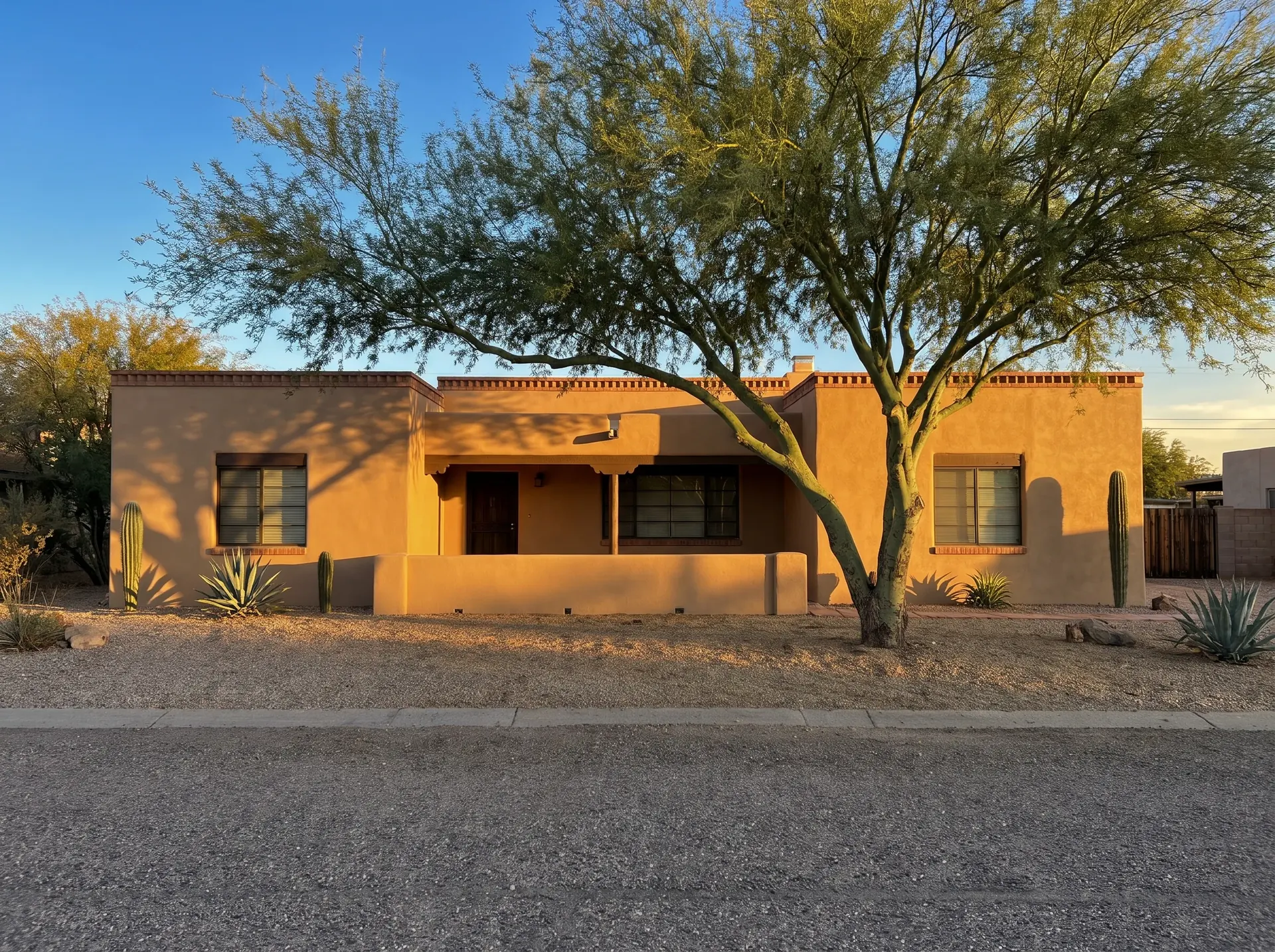
A new finish over walls that are still sound, or a tear off where the old system has failed, so the whole home reads as one surface again.

Color refreshes and full color changes using breathable coatings, with prep that deals with chalk and sun before anything goes on the wall.
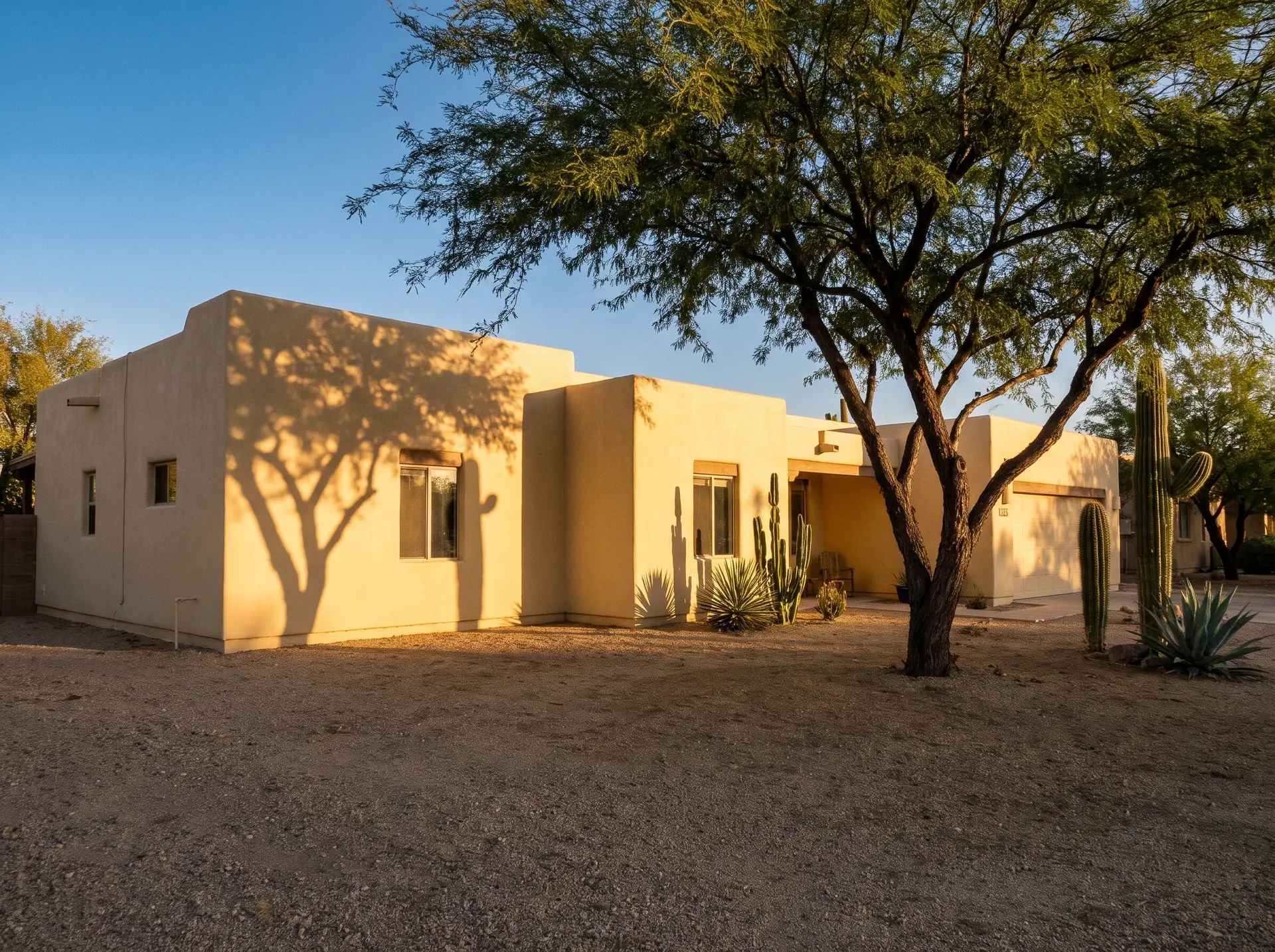
Thick, flexible coating systems for hairline cracking, along with a straight answer on the walls where they would trap moisture and do harm.
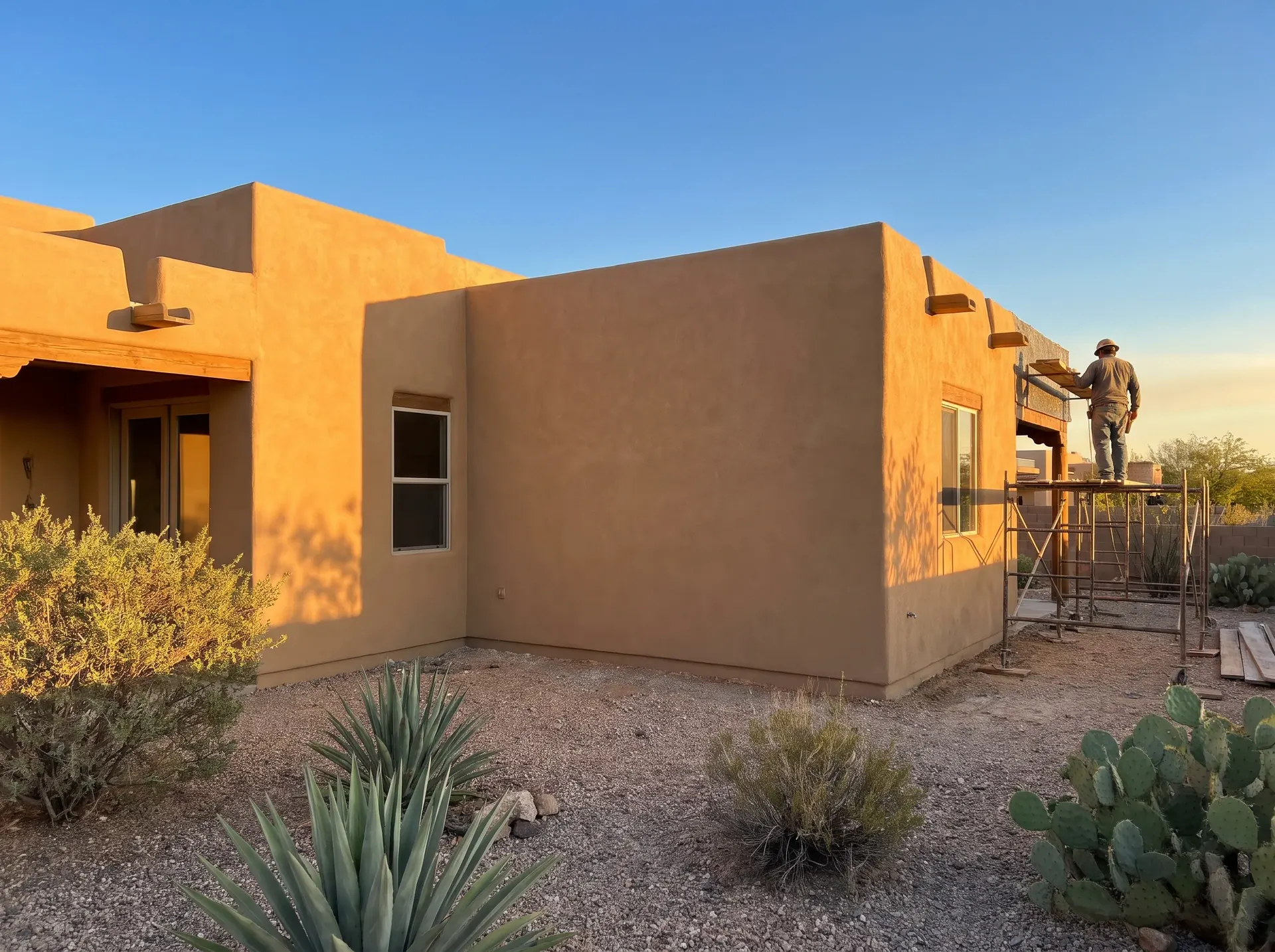
Lath, scratch, brown and finish coats for additions, garden walls and exterior upgrades on block or frame.
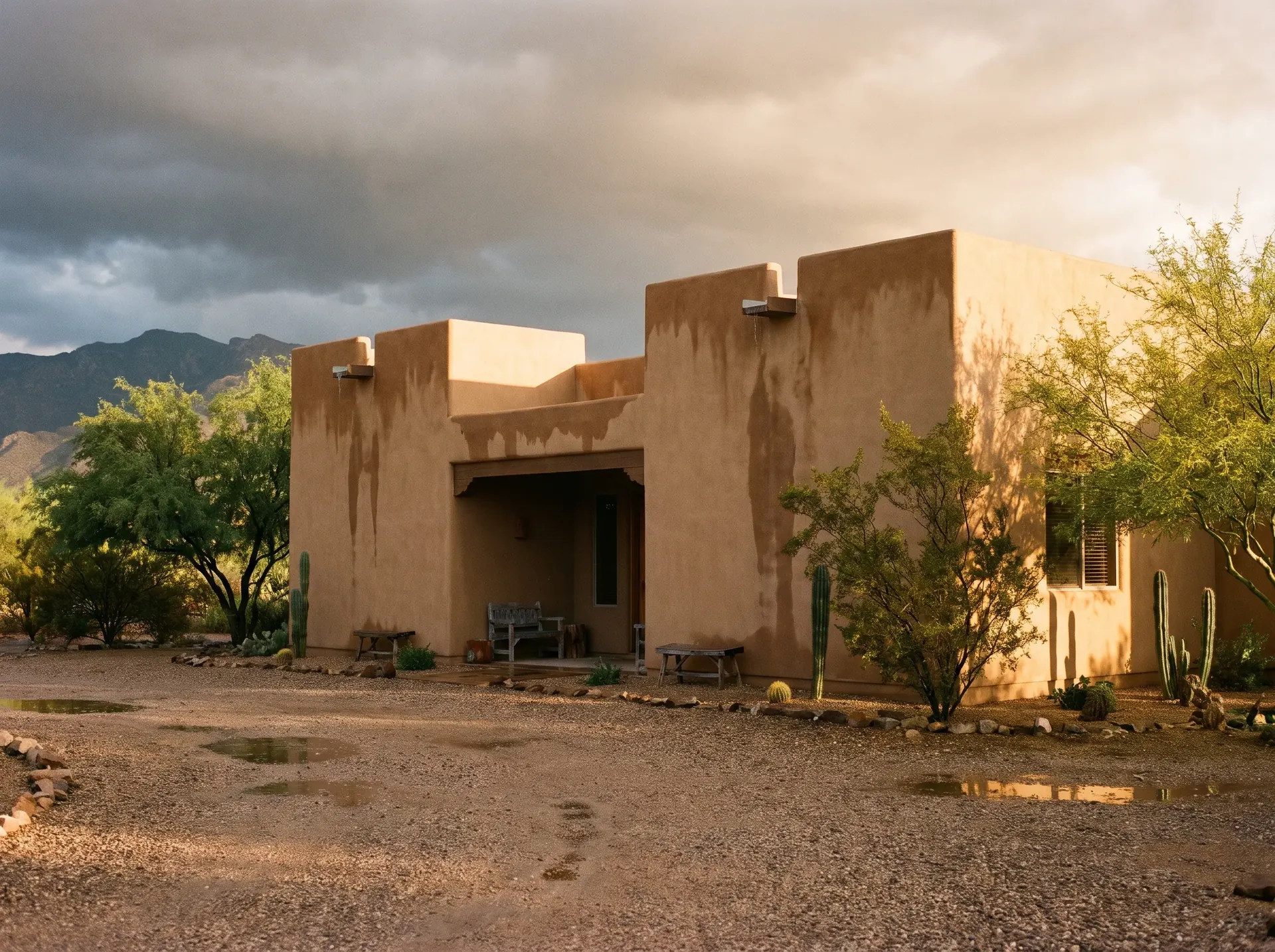
Moving cracks, parapet leaks and damp walls traced to their source and corrected from there outward.
Tell us the property name, its type and how many buildings are involved, and whether a board or owner needs to approve the work. We will arrange a walk.
Mon to Fri, 7am to 4pm. Saturday estimates by appointment.