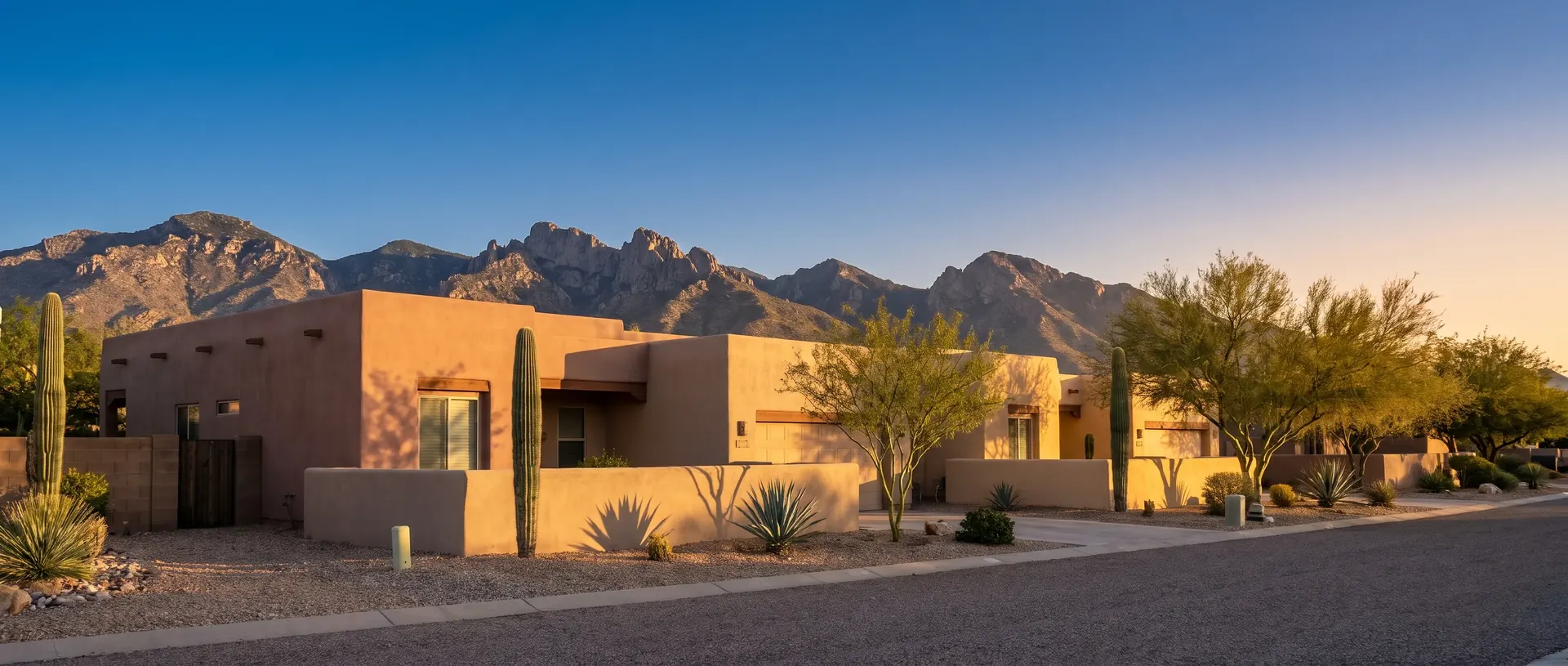
Oro Valley
Master planned communities off Oracle Road and La Canada, with Santa Fe and Territorial homes dating from the 1980s onward. HOA color rules matter here, and seasonal owners often find a crack or stain only on their return.
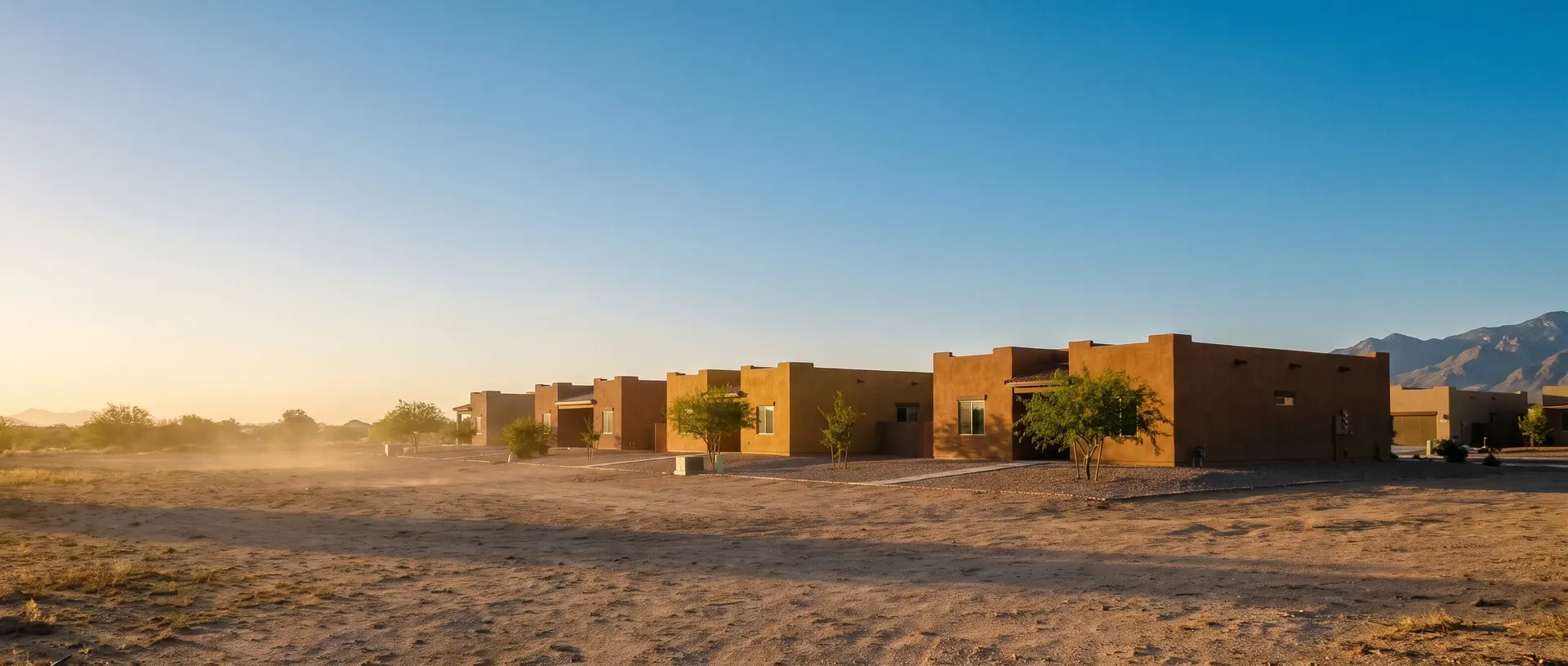
A newer home rarely needs anything dramatic. What it does need is a sensible decision about its first round of exterior work, made before a minor problem gets a coat of paint over it.
Marana's newer production homes in Continental Ranch, Gladden Farms and Saguaro Springs were built on open desert ground. If you own one, you probably have two things on your mind: small cracks at the corners of the windows, and a finish that no longer looks as clean as it did.
Those window corner cracks are common. A house settles as its ground and foundation find their level, and openings are where the stress in a stucco wall tends to gather. Most stay small and stable. The ones to watch are those that keep growing, or those that return quickly after being filled.
Then there is the first repaint or recoat cycle. Blowing dust off open land sticks to a stucco finish, gets into the texture, and acts as a bond breaker for whatever goes on next. This is the moment when your choice matters most, because the first coating decision narrows every later one. Going to paint or elastomeric means leaving fog coats behind, and it can be hard to come back. If the home has never been coated, it is worth stopping to compare before you pick a color.
We tell you which cracks are simply part of a home settling, which need filling, and which suggest something more. Often the right advice is to monitor it, not to spend money.
Dust is the enemy of a good bond on open ground. We wash the walls and test what is left, and we keep the gap between cleaning and coating short, so that fresh dust does not settle in first.
We compare a fog coat, paint and a color coat for your home, including what each one means for the coat after that. Where an HOA is involved, we take its color rules into account as well.
Yes. Cement shrinks as it cures, and a new home settles for its first few years, so fine lines are normal, especially at window and door corners. They are mostly a cosmetic matter. Keep an eye on them, and take a closer look if one widens, keeps returning, or shows staining around it.
For a fine crack, a paintable elastomeric sealant designed for masonry can work as a temporary fix, ideally tooled into the crack rather than smeared across it. It will not take texture the way stucco does, and it can stand out if the wall is not coated afterward. Wider cracks should be routed and repaired.
A few cracks at window corners are a small job, while cracking across a whole elevation is usually a coating decision. The price depends on how many cracks there are, how far apart, how high up, and how closely the repair has to blend into the finish. We look first and give you a written number.
A fog coat usually costs less than paint, because it is a single thin application with no primer, though wall area, height, access, repair work and cleaning all affect the number. It is only an option on unpainted cement stucco, so we confirm that first and then price it in writing.
Master planned communities off Oracle Road and La Canada, with Santa Fe and Territorial homes dating from the 1980s onward. HOA color rules matter here, and seasonal owners often find a crack or stain only on their return.
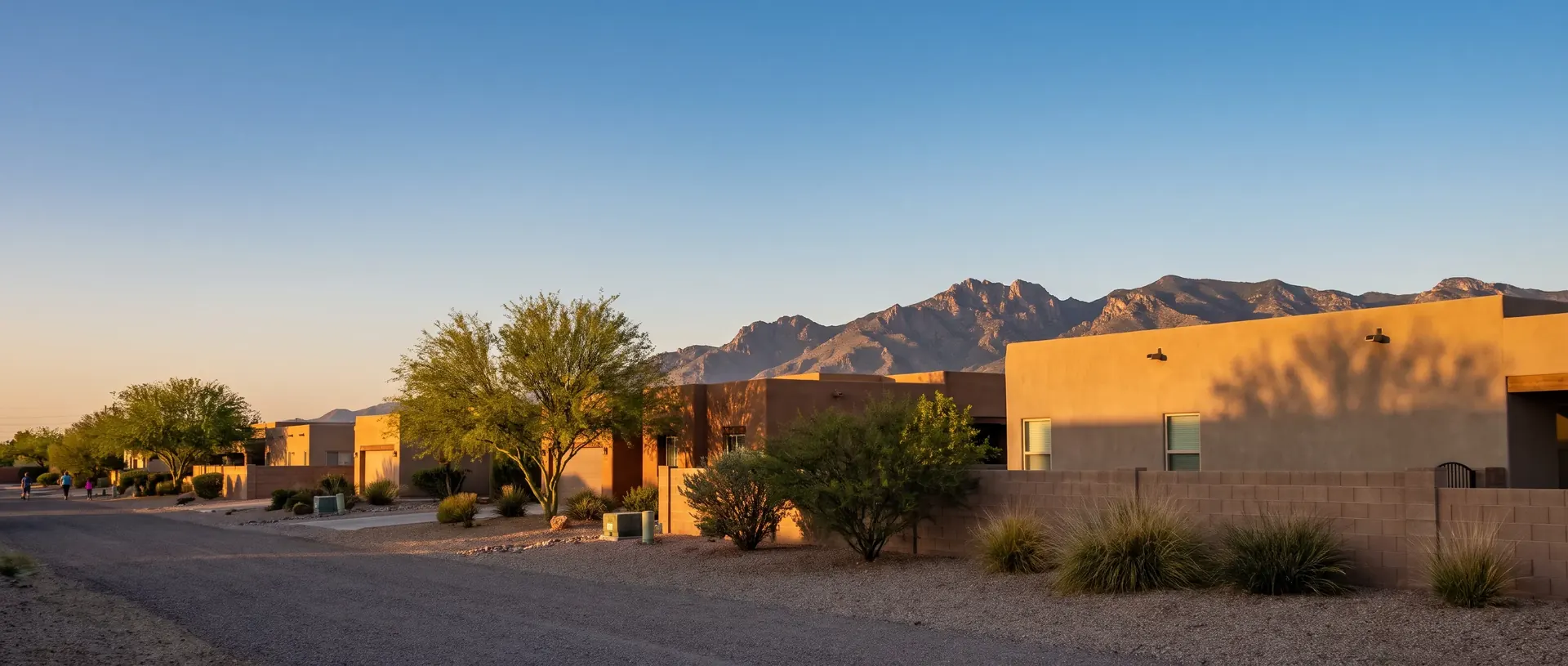
Rancho Sahuarita and Quail Creek, with production stucco homes, block garden walls and HOA oversight of exterior color. Many retired and seasonal owners here want a clear written scope.
Tell us the community, roughly how old the home is, and whether it has been painted or coated since it was built. We will arrange a time to look it over.
Mon to Fri, 7am to 4pm. Saturday estimates by appointment.