Stucco Repair
Damaged sections cut back to sound material, rebuilt in layers and blended into the finish, with the cause dealt with so the same spot does not fail twice.
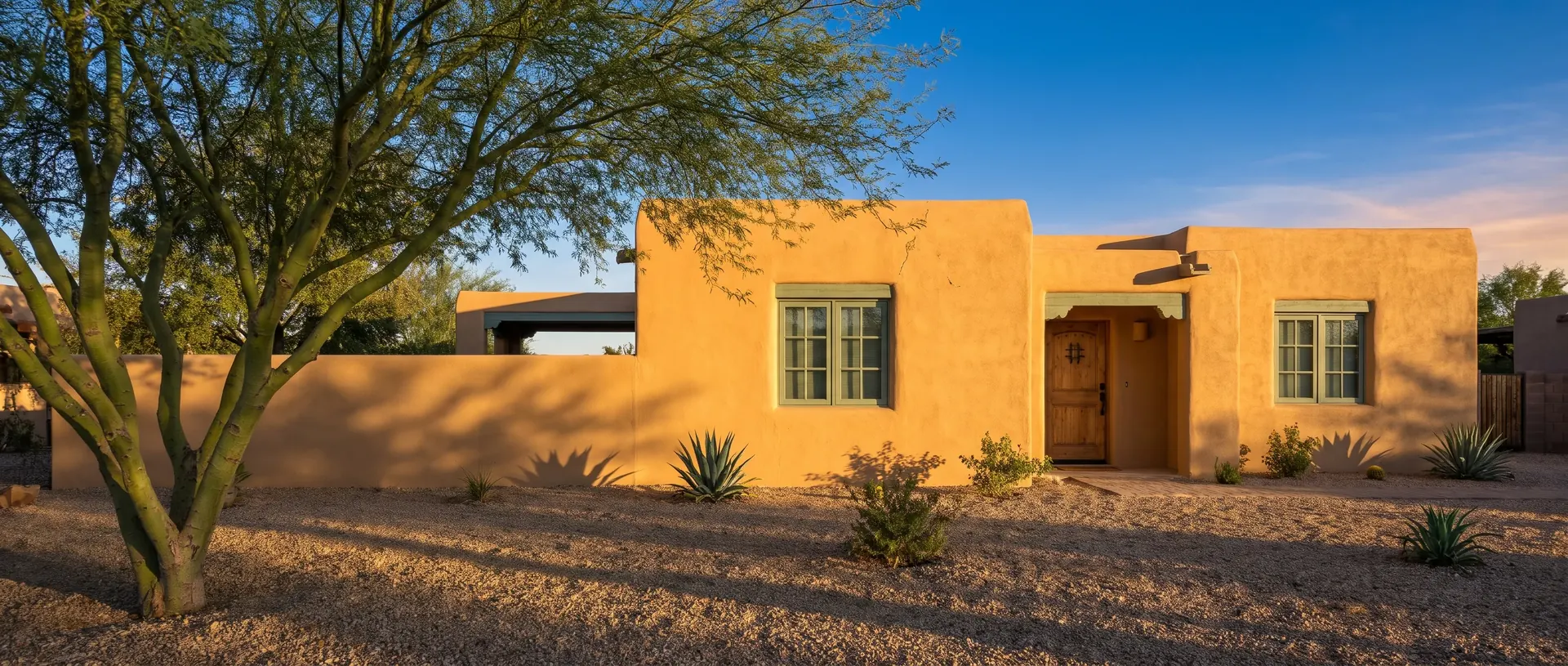
A new color can lift the whole home. Which product gets you there decides how the wall breathes, how it ages, and what you can do to it next time.
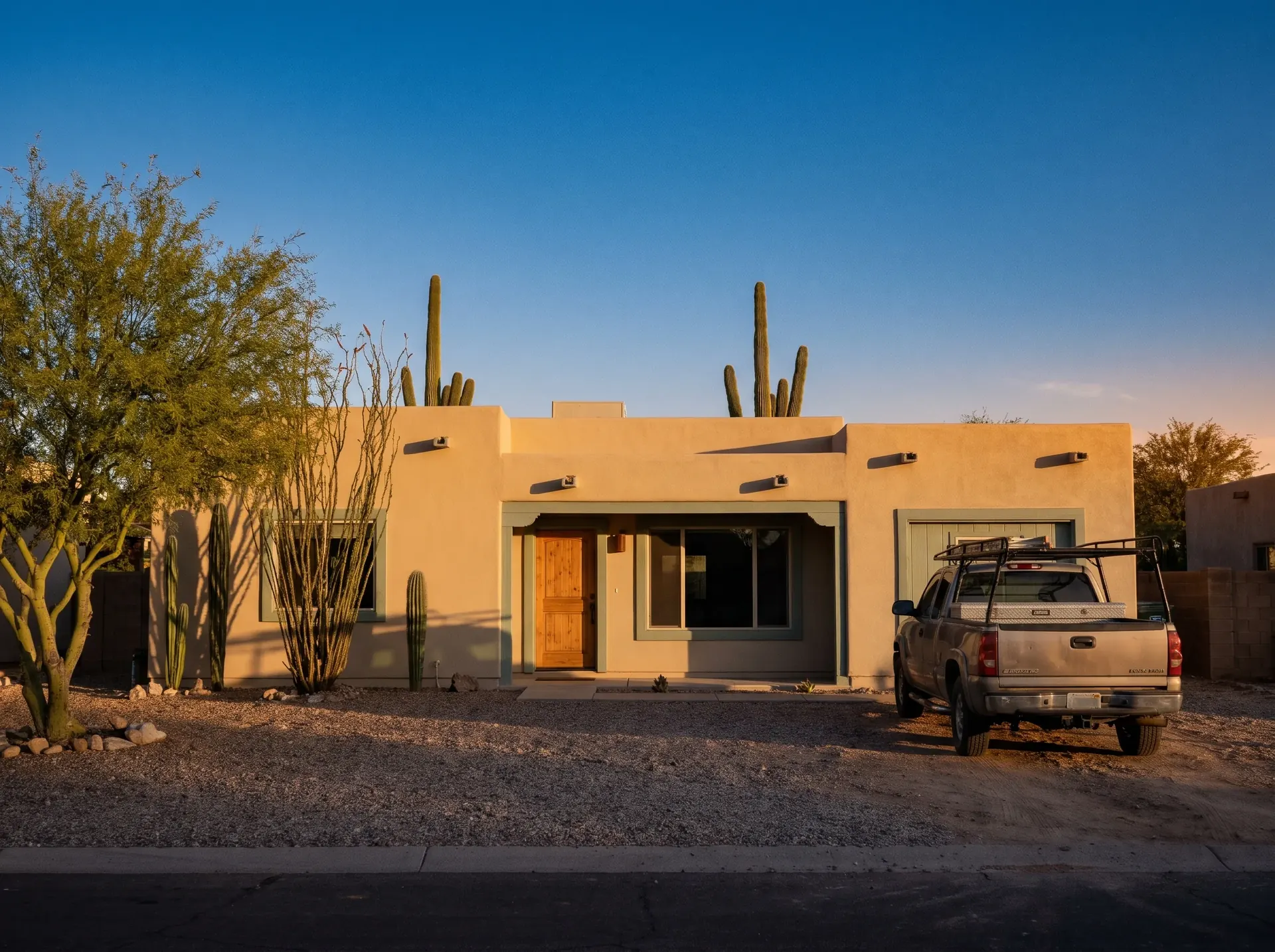
Once a wall has faded or you have simply tired of the color, the decision is less about shade than about what goes on the wall. There are three realistic routes, and they do not behave alike.
Paint forms a film on the surface. Masonry paints are widely available in almost any color and can hide a lot, and a good acrylic can still let the wall breathe to a reasonable degree. The catch is that once a wall is painted, it stays a painted wall. Later coats have to be paint, or the surface has to be prepared hard to accept anything else.
A fog coat is a thin cement based color wash sprayed onto bare cement stucco. It soaks in rather than sitting on top, so it stays highly breathable and will not peel. It evens out fading and small patches and costs relatively little. It will not cover cracks, its color range is narrower and more earthy, and it does not work on painted or acrylic finishes.
A color coat is a new finish coat of cement or acrylic, with color through the material. It gives you new texture as well as new color, and it hides patchwork better than either of the others. It is also the largest of the three, and sits close to a resurfacing job.
The wall has been painted before, you want a color a fog coat cannot reach, or you need a specific HOA palette match. The stucco should be sound, with cracks already dealt with.
The stucco has never been painted, you are happy in the desert color family, and you want to keep the option of future recoats. Painting bare stucco is a one way door, so it should be a decision rather than a default.
If the fading sits above cracks that keep moving, damp patches or hollow sections, any coating will just cover a problem that is still active. Deal with that first.
Tucson's sun breaks down binders and pigments until the surface rubs off on your hand, usually worst on south and west walls. Paint applied over chalk peels, so we test for it and wash it off first.
Old repairs in the wrong tone, efflorescence staining and a shadow where an awning or air conditioner used to sit. A corner to corner coat gets the whole elevation reading as one color again.
A new owner's preference, a dated scheme or an HOA requirement. Darker colors absorb more heat, so we talk through what a deep color will mean on a long south facing wall before you commit.
Bare cement, fog coat, paint, acrylic or elastomeric. We test to find out, because each limits what can follow it and that often narrows your choices immediately.
We check how much the surface rubs off and whether existing coats are still bonded. A poor result changes the prep, and sometimes changes the product we would use.
We look over the cracks, the base of the walls and the parapets, so nothing goes on over a problem that would push a new coat off from behind.
We talk through sheen, light and color direction, and whether your community requires HOA approval. We will gather what a board usually asks about, though approval itself rests with them.
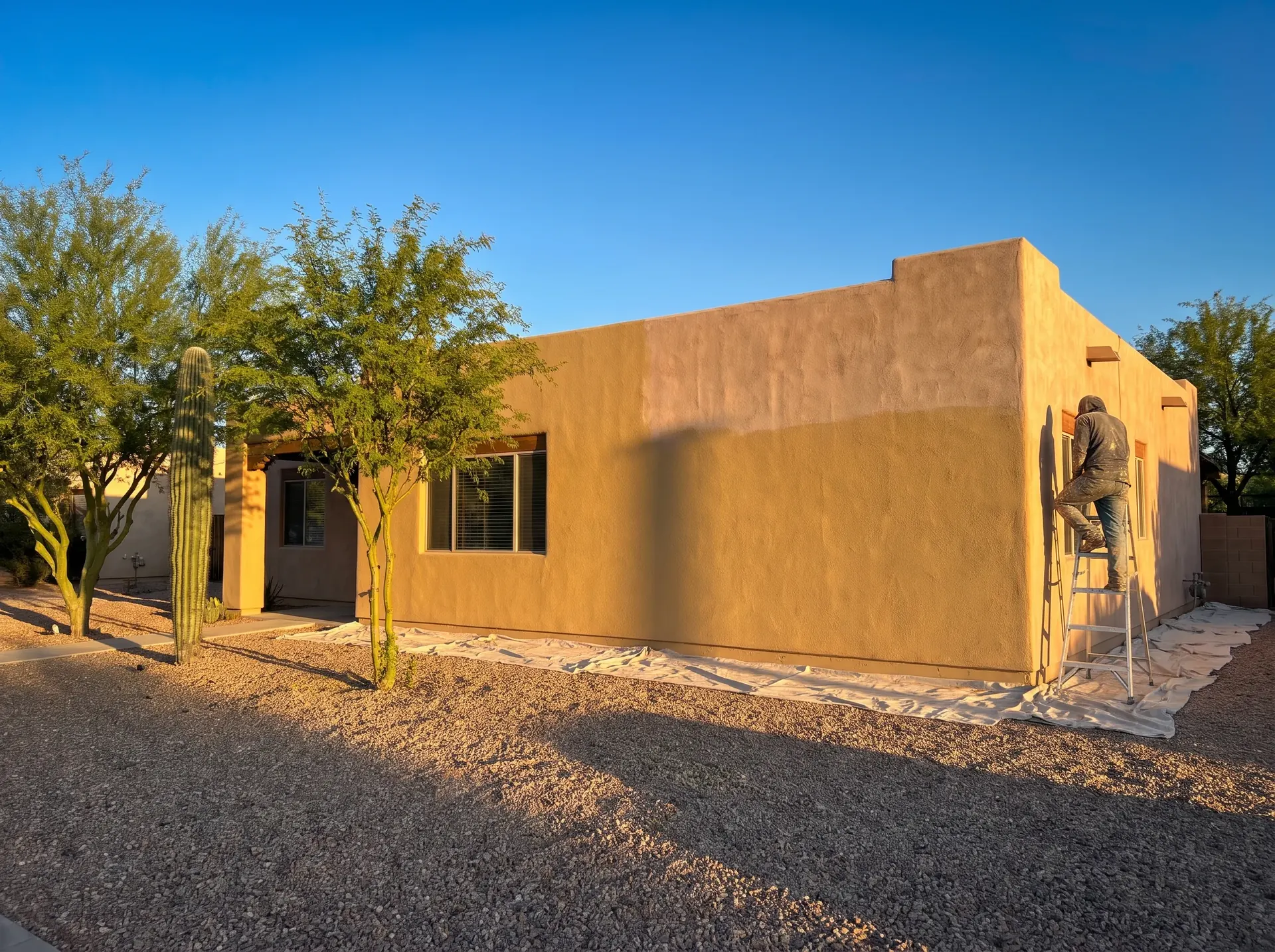
We clean off chalk, dust and any staining without driving water behind the stucco, then let the wall dry. Tucson dust is a bond breaker, so this step matters.
Cracks get routed and filled to suit the coating, and damaged areas get patched. New cement patches need time to cure, or they can burn through the color.
We mask windows, fixtures, gates and gravel edges. We also check the base of the wall and leave the weep screed open instead of painting it shut.
New or patched cement and heavy chalk usually need a masonry primer. Sound, previously painted walls may not, and we will not add a coat that has no purpose.
We spray into the texture and back roll where the coating calls for it, working out of direct sun and within the temperature limits on the product.
We go around the home with you in low light, when a thin spot or a lap line is easiest to see, and take care of anything that needs it.
Because we treat paint as one choice, not the only one. Plenty of Tucson stucco has never been painted and could take a fog coat or a color coat instead. We lay out what you give up either way, including what it does to your options next time around.
Because prep is where exterior coatings live or die here. A coat over chalk, dust or moving cracks can look perfect for its first summer and fail soon after. We spend time on the parts you will never see.
And because we understand the wall behind the color. We are stucco people first, so we can tell you if the cracks and stains are a coating matter or a sign of something a coating should not cover.
Tell us what the walls look like now and what you have in mind. We will check the surface and tell you which route fits.
Paint adds a film that can reduce breathability, particularly in heavy coats. It commits you to repainting on a cycle, usually more often than a cement finish would need attention. It can peel where water gets behind it, and it rules out a later fog coat without serious prep. On a sound, dry wall, none of that is a deal breaker, but go in knowing.
On stucco that is clean, cured and sound, yes, with a masonry coating suited to the surface. New stucco needs curing first, commonly about a month, because fresh cement is alkaline and can burn through paint. Chalk, dust and old loose paint all have to come off, or the new coat will fail with them.
New stucco, patched areas, bare cement and chalky walls generally do, with a masonry or alkali resistant primer. A well bonded existing coat that passes a chalk test may not. Follow the coating maker's directions for the product you are using, because some are designed as self priming.
A fog coat is a thin mix of cement, pigment and fine additives, sprayed over existing cement stucco to renew its color. It soaks into the surface instead of forming a skin, so it does not peel and it does not trap moisture. It only works on bare cement stucco, and it will not hide cracks.
A fog coat keeps the wall breathable, cannot peel and generally costs less. Its limits are a narrower color range, more color variation across the wall, and no crack bridging. Paint offers almost any color and an even look, and some crack filling. It also forms a film and commits you to paint from then on. On unpainted stucco we usually look at a fog coat first.
On painted stucco in Tucson, plan on something like seven to twelve years, with the south and west walls showing their age first. The sheen and darkness of the color, the quality of the coating, and how well the wall was prepared all move that number. Rubbing a hand on the wall and seeing chalk is a good sign that it is getting close.
Wall area and height set the base, then prep moves the price more than the paint does: washing, crack repair, patch curing and masking around features. A rough, deep texture takes more coating than a smooth one, and a big color change may take an extra coat. We price from your home, in writing, after we have looked at the surface.
We do stucco color work in Tucson, Oro Valley, the Catalina Foothills, Marana, Sahuarita, Casas Adobes, Vail and Green Valley.
Damaged sections cut back to sound material, rebuilt in layers and blended into the finish, with the cause dealt with so the same spot does not fail twice.
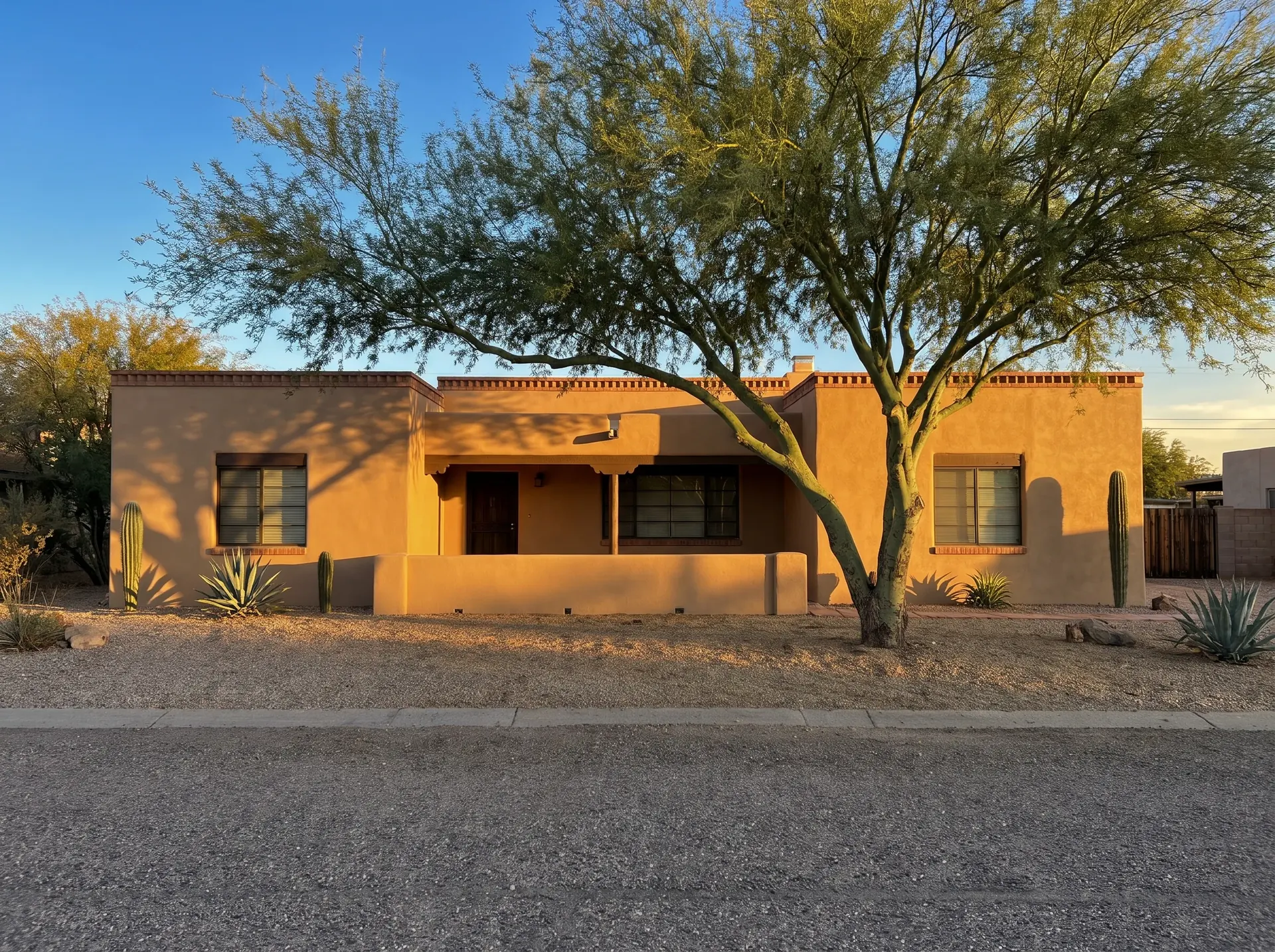
A new finish over walls that are still sound, or a tear off where the old system has failed, so the whole home reads as one surface again.
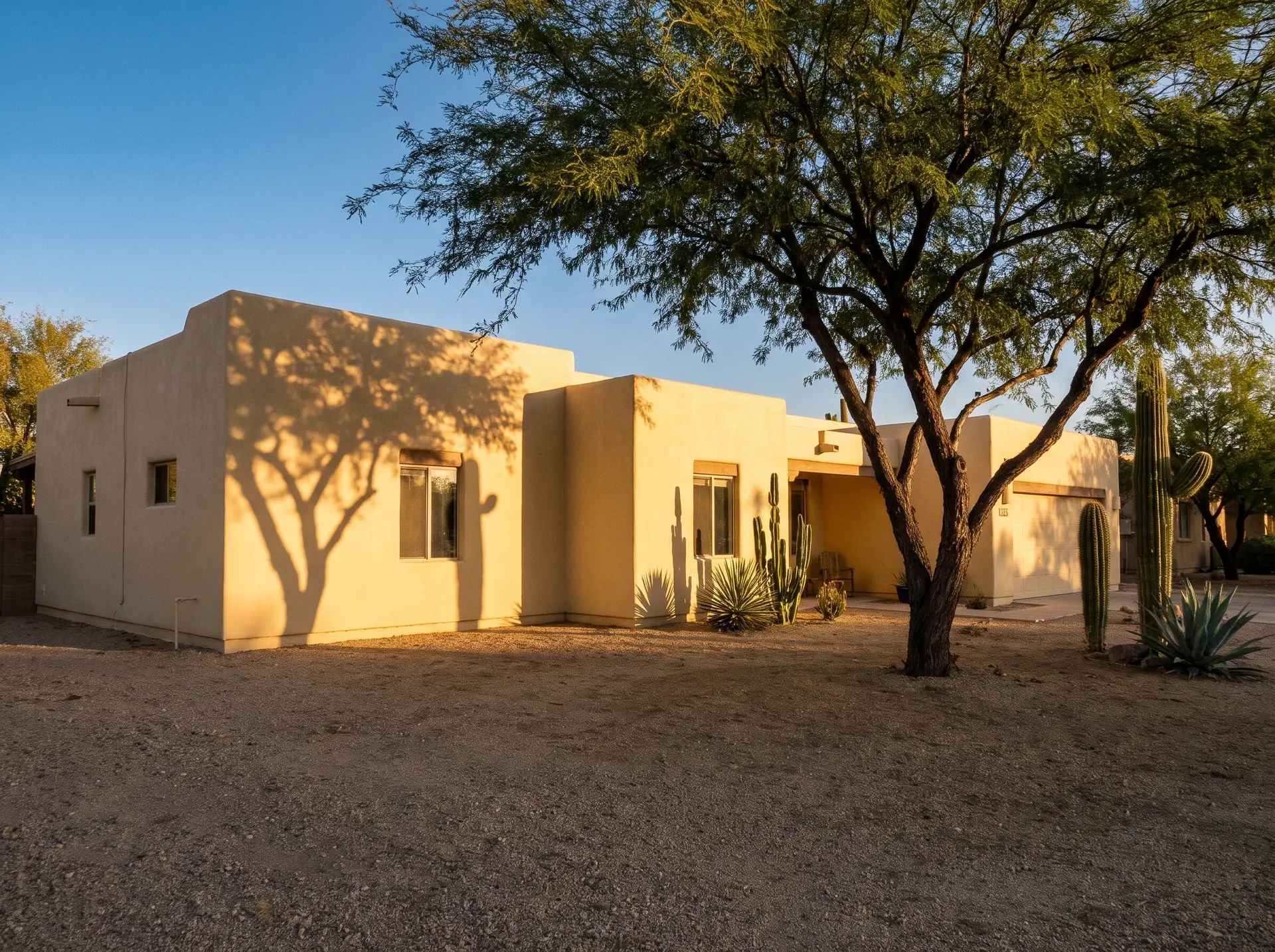
Thick, flexible coating systems for hairline cracking, along with a straight answer on the walls where they would trap moisture and do harm.
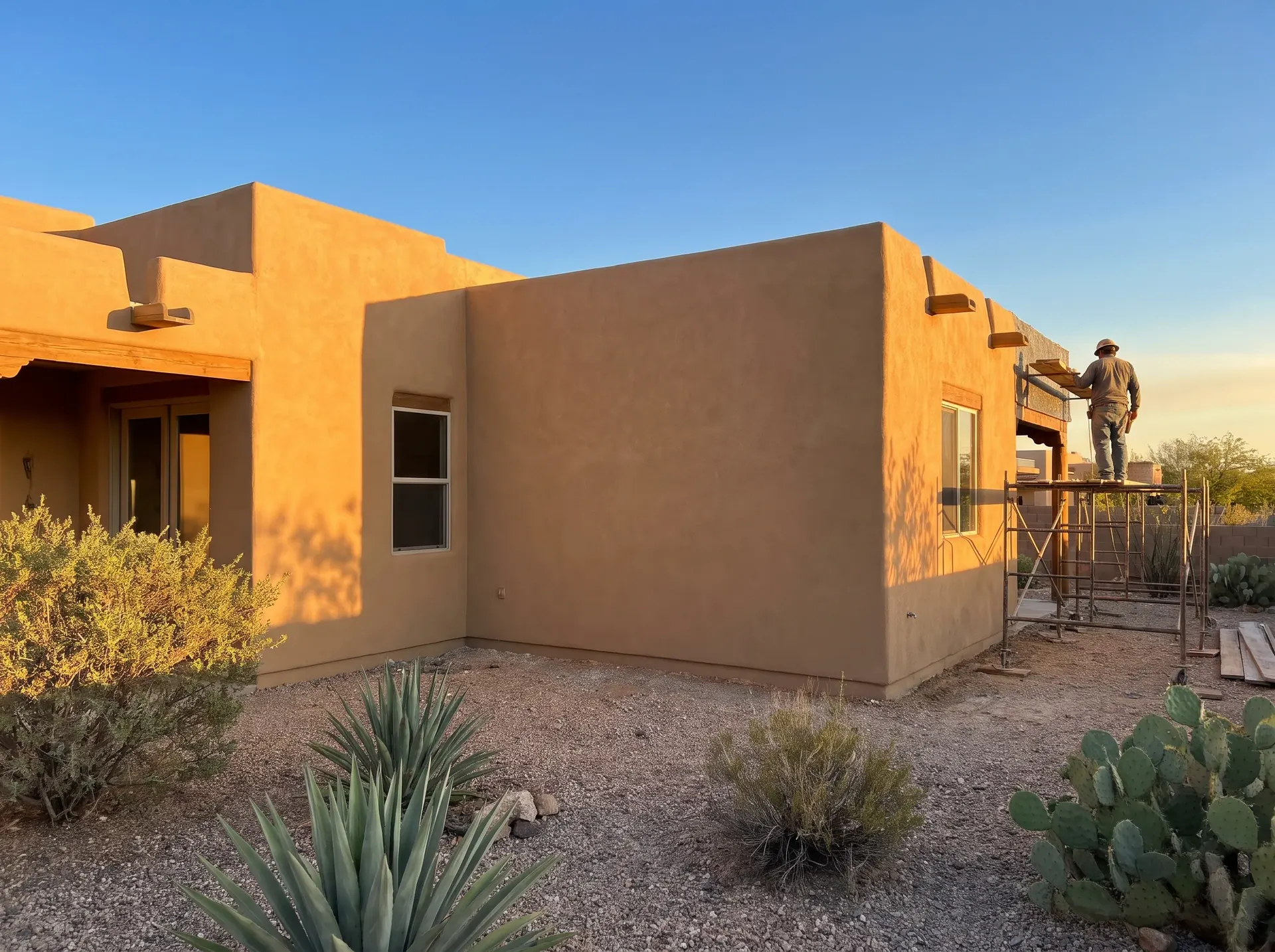
Lath, scratch, brown and finish coats for additions, garden walls and exterior upgrades on block or frame.
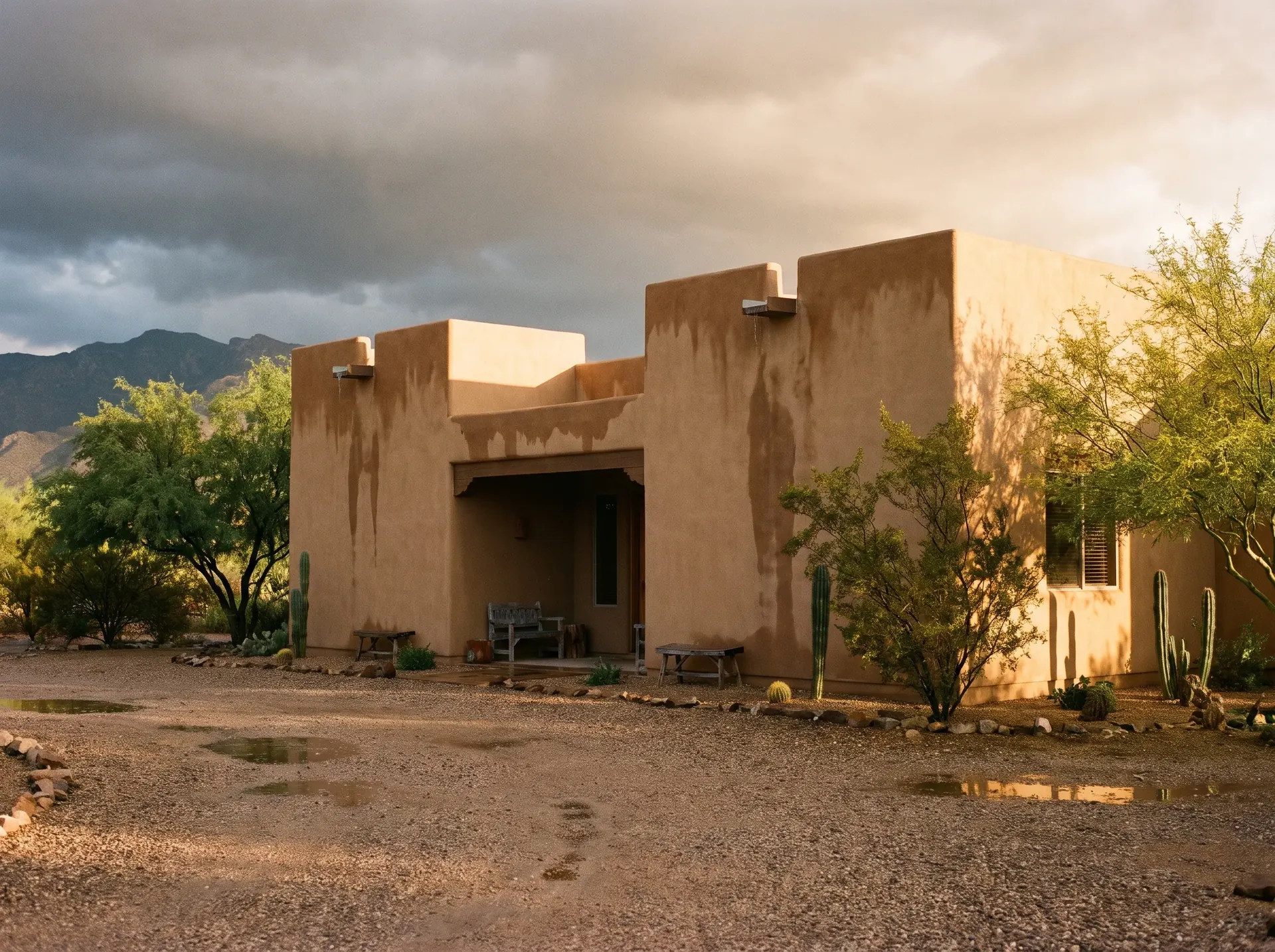
Moving cracks, parapet leaks and damp walls traced to their source and corrected from there outward.
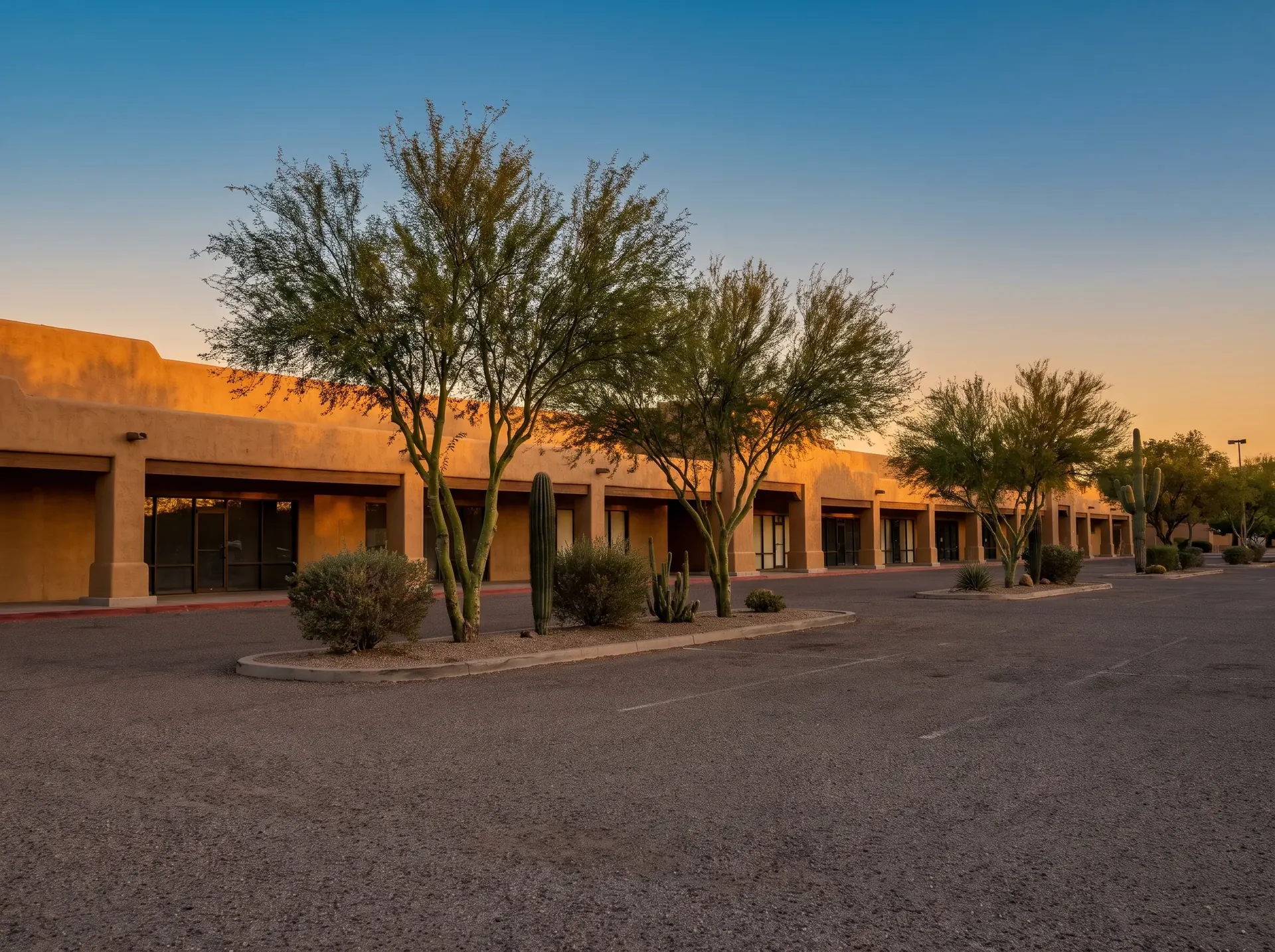
Shopping centers, offices, multifamily and HOA communities, with phasing and scope documents that suit a board or owner.
Tell us about the walls, whether they have been painted before if you know, and the look you are after. We will check the surface and go through the choices with you.
Mon to Fri, 7am to 4pm. Saturday estimates by appointment.