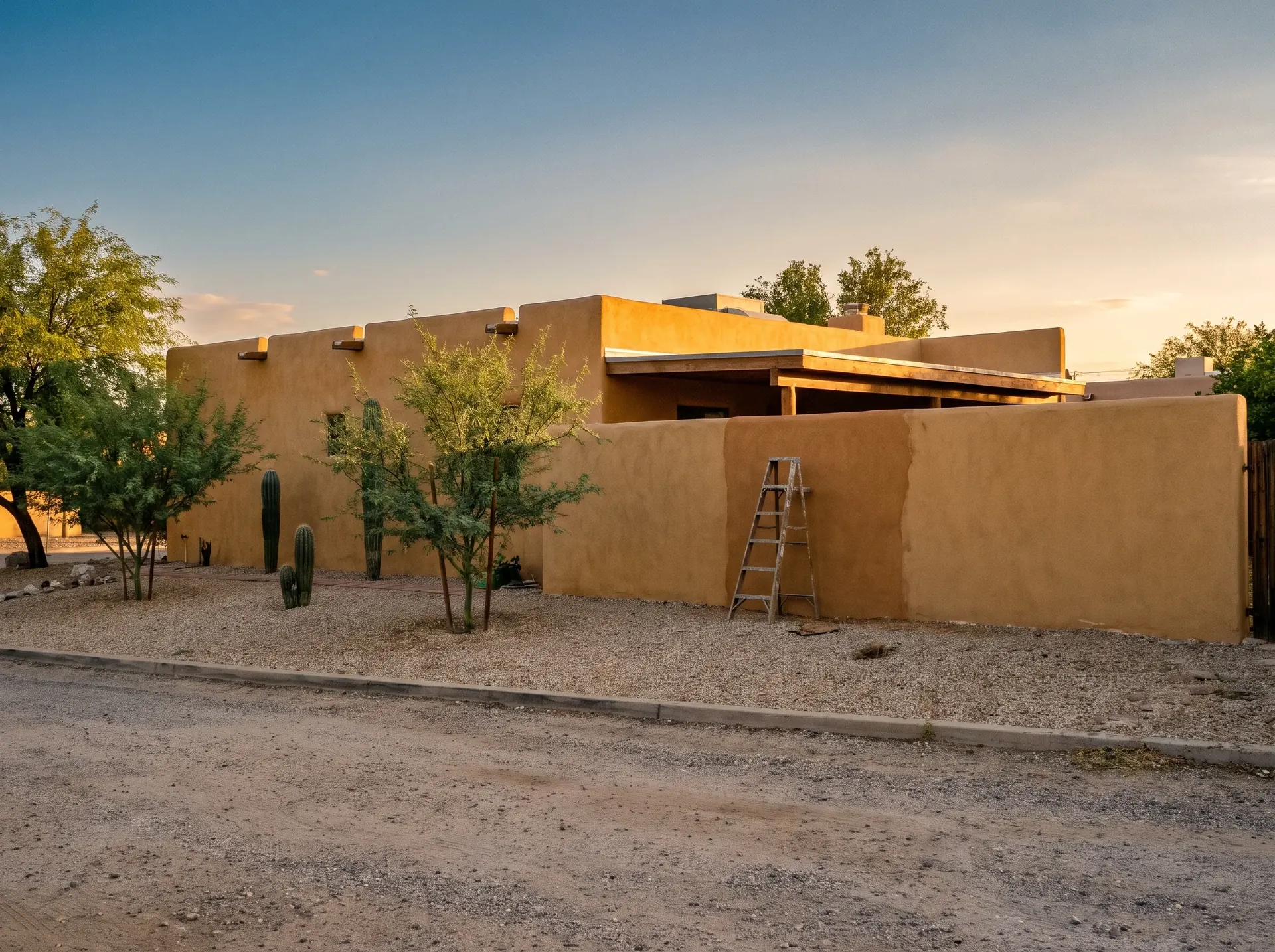
Stucco Repair
Damaged sections cut back to sound material, rebuilt in layers and blended into the finish, with the cause dealt with so the same spot does not fail twice.
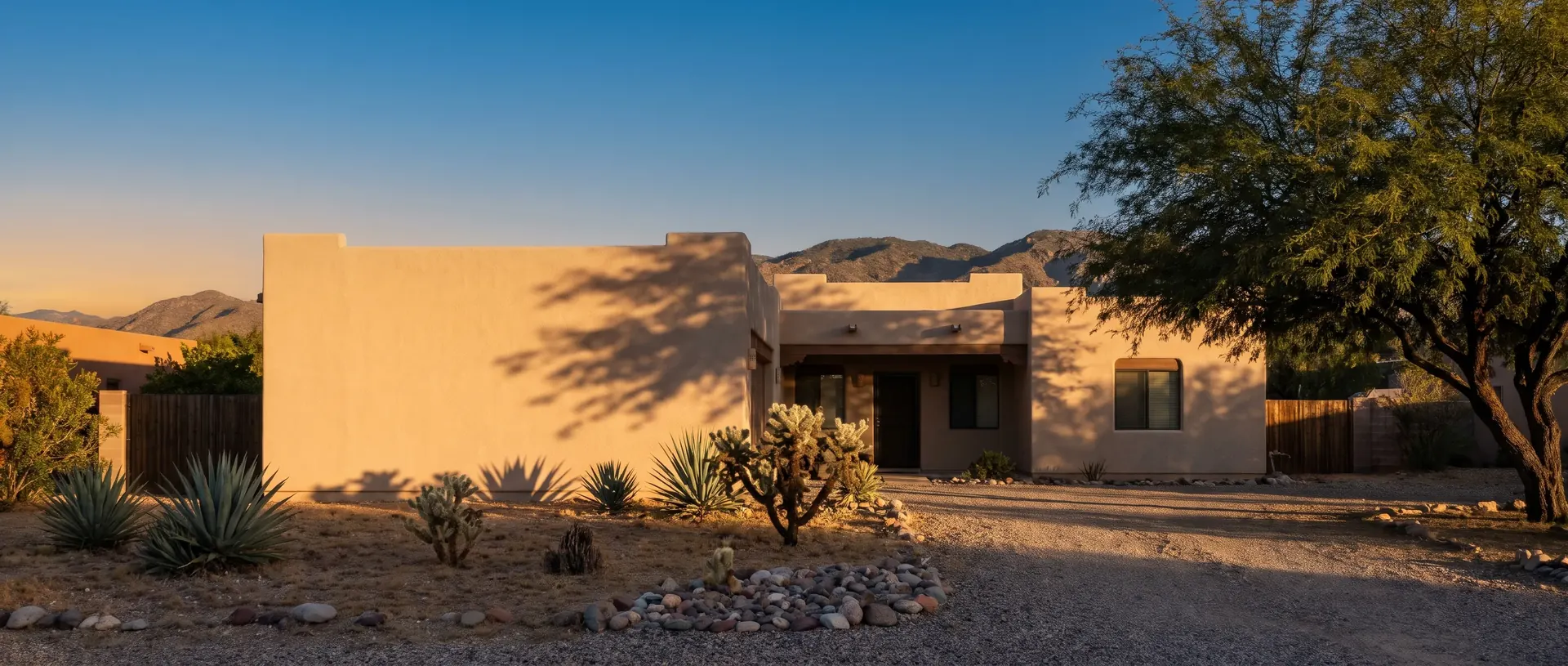
A thick, flexible coating can quiet years of hairline cracking on a sound wall. On a wall that is taking on water, the same coating can make things worse. Knowing which wall you have is the whole decision.
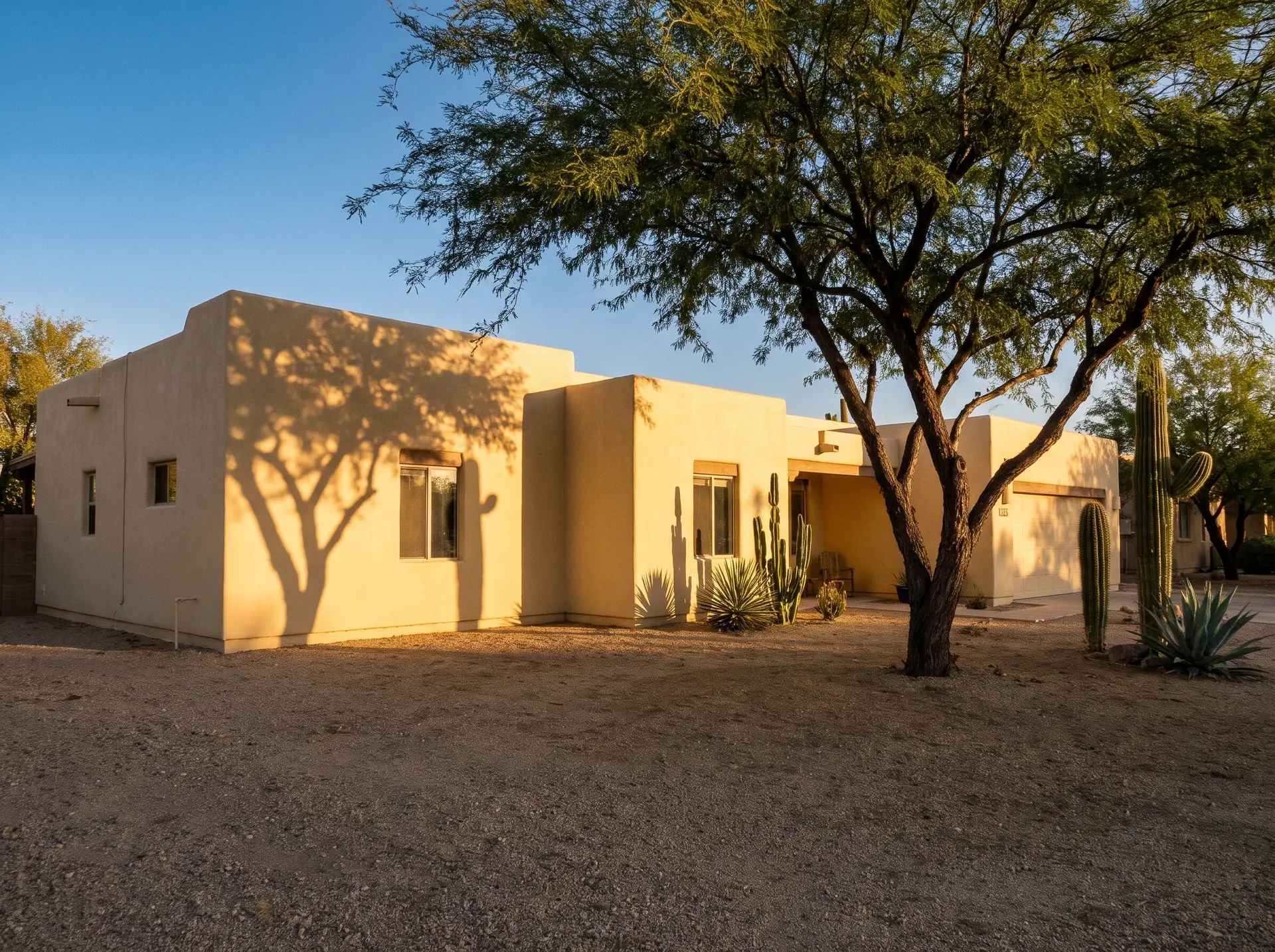
Elastomeric is often sold as the cure for cracked stucco. It is a useful product with real limits, and it deserves a straight comparison with your other options.
It is a high build acrylic coating, roughly ten times the thickness of a standard coat of paint when it is applied properly, and it stretches. That lets it bridge hairline cracks and move with a wall through Tucson's temperature swings, when a wall can go from cool at dawn to hot enough to burn your hand by mid afternoon. It also sheds wind driven monsoon rain well, and a light color can keep a sun facing wall a little cooler.
The trade off is breathability. Stucco is porous, and water that gets in normally dries back out through the face of the wall. A thick elastomeric film slows that drying. If water gets in from behind, from a failed parapet cap, a scupper or a roof transition, it can no longer escape through the face, so it sits in the wall. Then you get blisters full of water, or a wet wall that looks fine from the outside while the paper and lath behind it stay damp.
The stucco is bonded and dry, the parapet caps are watertight, and the main problem is widespread hairline cracking that a thin coat of paint would not cover. You should also be comfortable that future coats will need to be compatible with it.
For fading without cracks, paint or a fog coat costs less and keeps the wall breathing. For one or two wider cracks, a targeted crack repair makes more sense than coating the whole home. If the stucco has never been painted, think hard, because elastomeric is very difficult to undo.
Do not coat a wall with an active leak, hollow sections, or damp staining that has not been explained. Do not use it as a fix for moving structural cracks, because no coating will hold those for long.
The fine, map like crazing and thin shrinkage lines that show through paint and collect dust. A full thickness coat bridges these and keeps them from reappearing each season, which ordinary paint usually cannot manage.
Monsoon storms push water sideways into small cracks on open elevations. On sound walls, the coating gives a tougher shield against that rain, particularly on the sides of the home that face the storms.
South and west walls bake every afternoon and cool sharply at night. A flexible film moves with that cycle and tends to hold up against it better than a harder, thinner coat that cracks with the wall.
We look for signs of water in the wall and check suspect areas, particularly below parapets, scuppers and roof transitions. This is the step that decides whether we should coat the wall at all.
Hairline, wider or moving. Hairlines suit the coating, wider cracks need routing and filling first, and cracks that keep opening point to something a coating should not be asked to fix.
We check for chalk, dust and old loose coatings. A thick film puts more pull on whatever is beneath it, so a weak old coat is a bigger risk here than it would be with paint.
A written scope for elastomeric if it suits the wall, the cheaper alternative if it would do the job as well, and clear notes on what the coating will mean for future maintenance.
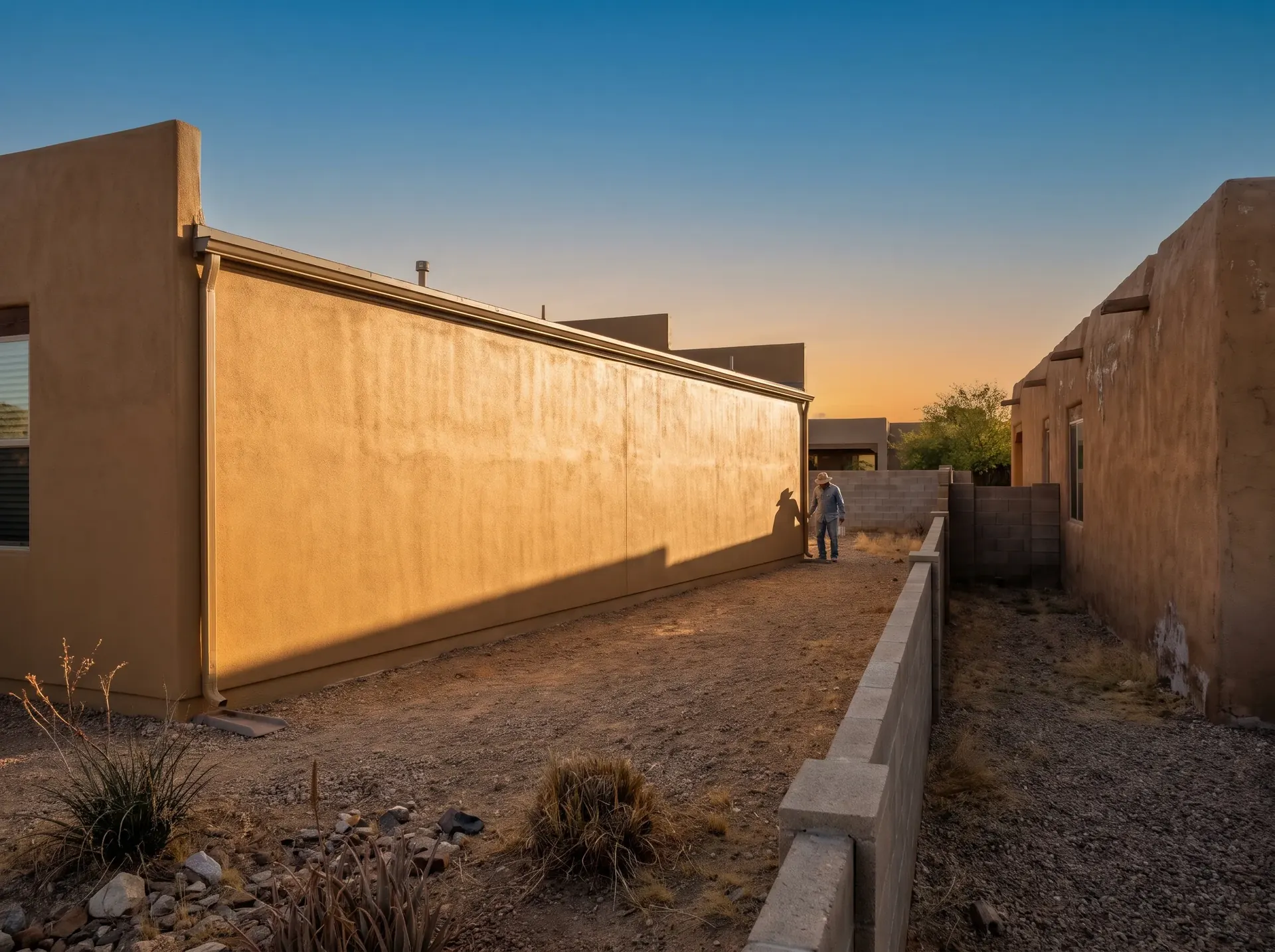
We correct or coordinate any leak source, including caps and roof transitions, before any coating is considered. Coating over water is the mistake we most want you to avoid.
We wash off chalk, dust and loose material, then let the wall dry completely. Tucson's dust settles fast, so we keep the time between washing and coating short.
Hairlines get a brush grade filler where needed. Wider cracks get routed out and filled with a compatible flexible material, then textured so they will not telegraph through.
We prime with what the system calls for, often a masonry conditioner on chalky or porous stucco. Skipping this step is a common reason elastomeric comes off in sheets.
The coating goes on heavily, typically in two coats, and is checked with a wet film gauge. Too thin and it will not bridge cracks. We leave weep screeds and other drainage points open.
We watch the weather, because a monsoon shower on an uncured coat can wash it out. Then we walk the elevations with you and note the film has to be kept compatible next time.
Because we are happy to talk you out of it. A coating sold to the wrong wall causes problems you cannot see for years, and they are expensive to reverse. If paint or a fog coat would serve you better, we will say so.
Because we look at the whole wall first. On a flat roofed home, the parapet matters more than the crack that made you pick up the phone, and we check it before recommending anything.
And because the coating only works at the right thickness. Thinning a product to stretch it is easy and impossible to spot from the street. We apply to the rated thickness and will show you how it is measured.
Tell us about the cracking and how old the home is. We will check for moisture and give you an honest answer, including when the answer is no.
It can be, on the right wall. On sound, dry stucco with widespread hairline cracks, it is one of the better answers. On a wall taking in water from a parapet or roof, it is a poor one, because the film slows drying. Stucco condition decides the question more than the product does.
Longer than ordinary paint when it is applied at full thickness. Ten years is often quoted, and on a well prepared wall it can do that. We would treat that as a good result on hard working south and west walls here, rather than a promise. Thin application or a hidden leak can shorten it a lot.
It breathes less than paint or a fog coat, so moisture behind it can blister the film. It costs more because it takes more material and labor. It can pick up dust while soft in the heat, and patches are hard to blend. It is also very hard to remove, so once it is on the wall, your future options shrink.
Not on a wall with an active leak or damp areas that have not been explained. Not over hollow stucco or a weak old coating. Not as a treatment for cracks that keep moving. And not in monsoon conditions or very hot direct sun, when it can wash out or skin over too quickly.
We do not point to one brand. Look for a true high build acrylic elastomeric, rated for masonry, with a published elongation and a recommended film thickness you can actually reach. How the wall is prepared and how thick it is applied will affect the result more than the label on the bucket.
You can, but standard paint will not hold them closed. They usually show again within a season or two. A thick masonry coat or elastomeric bridges them better, though it breathes less and is harder to undo. Before any of that, make sure they really are hairlines and are not moving, because wider cracks need filling first.
We work with elastomeric systems in Tucson, Oro Valley, the Catalina Foothills, Marana, Sahuarita, Casas Adobes, Vail and Green Valley.
Damaged sections cut back to sound material, rebuilt in layers and blended into the finish, with the cause dealt with so the same spot does not fail twice.
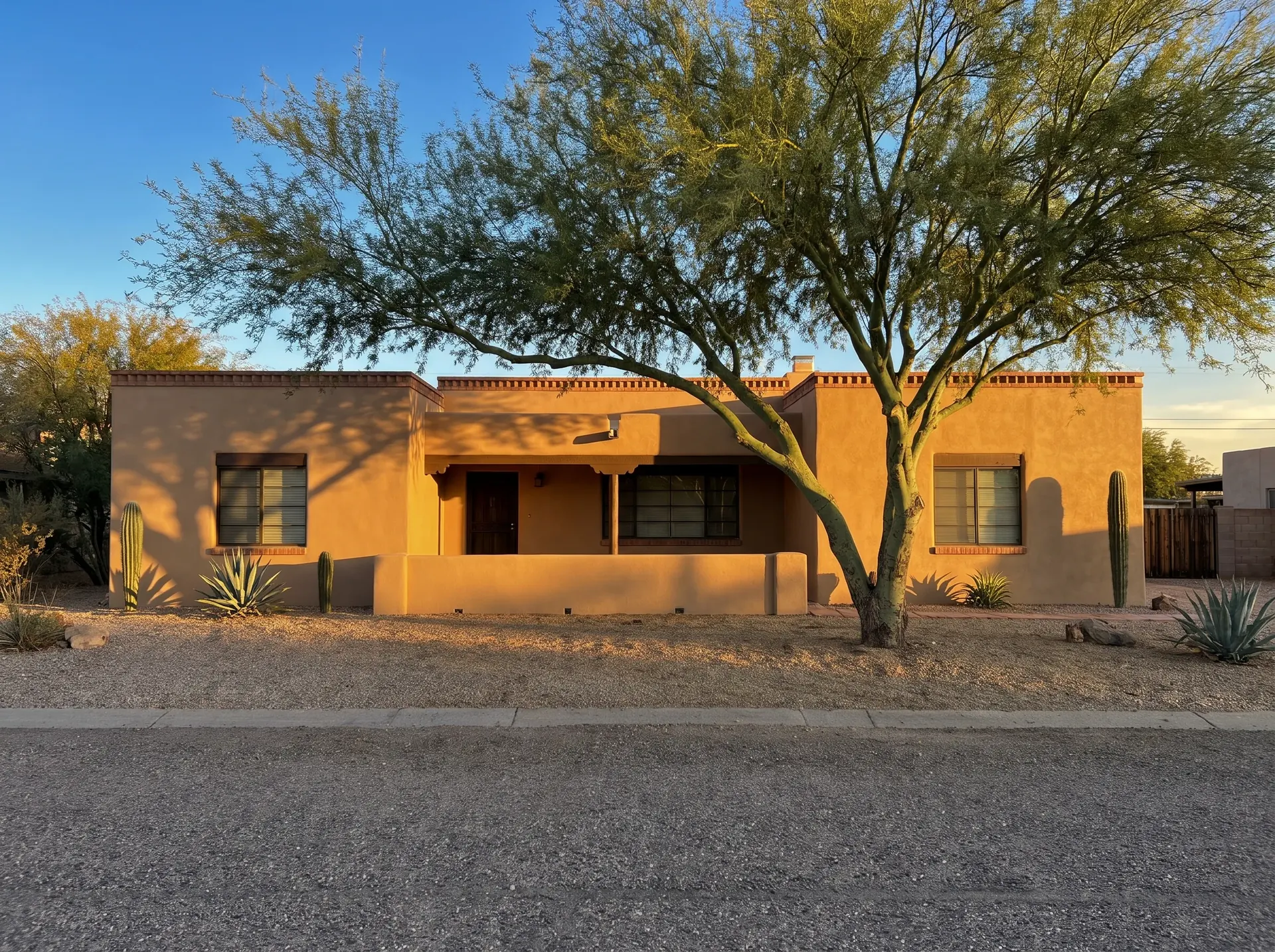
A new finish over walls that are still sound, or a tear off where the old system has failed, so the whole home reads as one surface again.
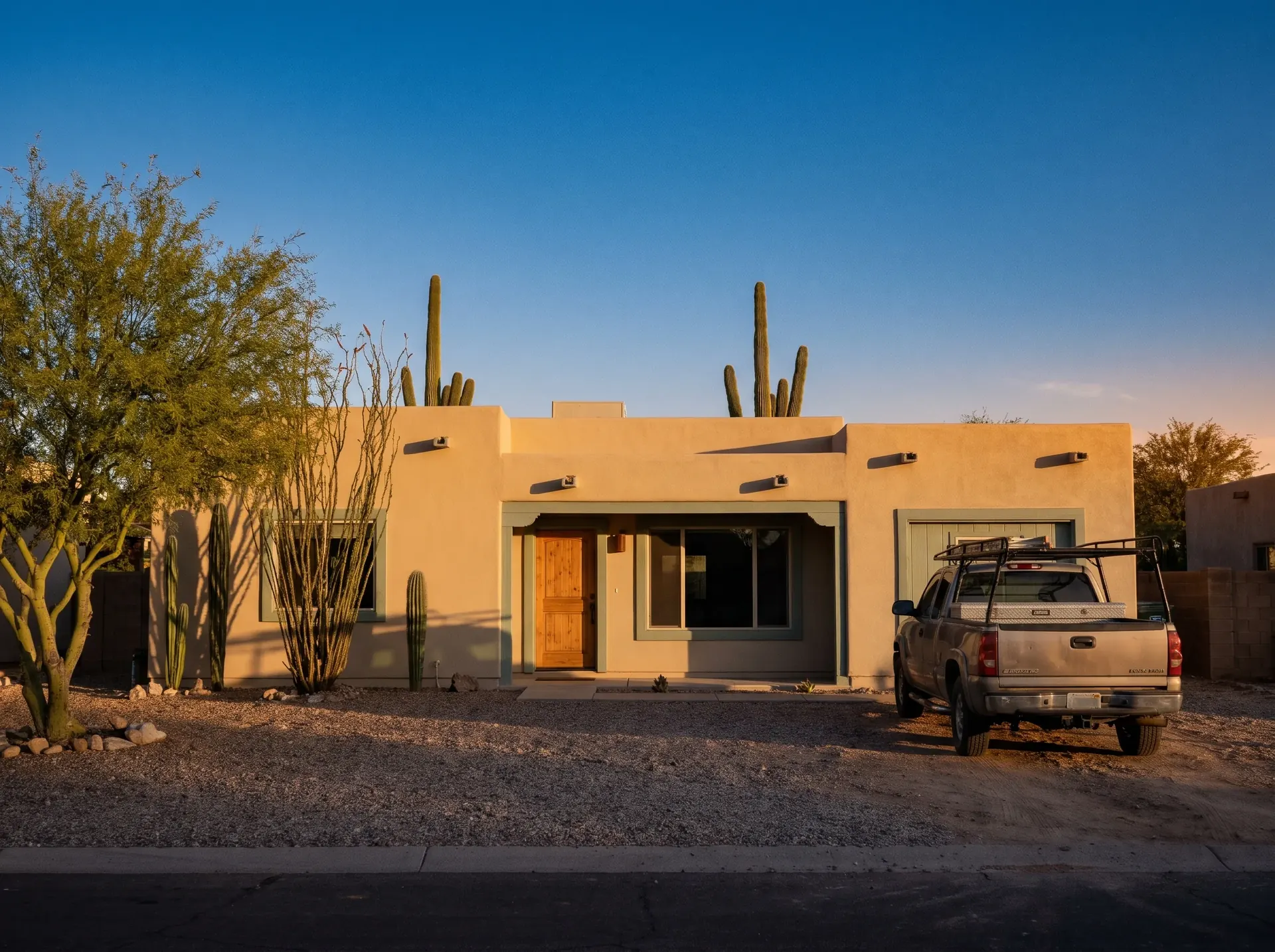
Color refreshes and full color changes using breathable coatings, with prep that deals with chalk and sun before anything goes on the wall.
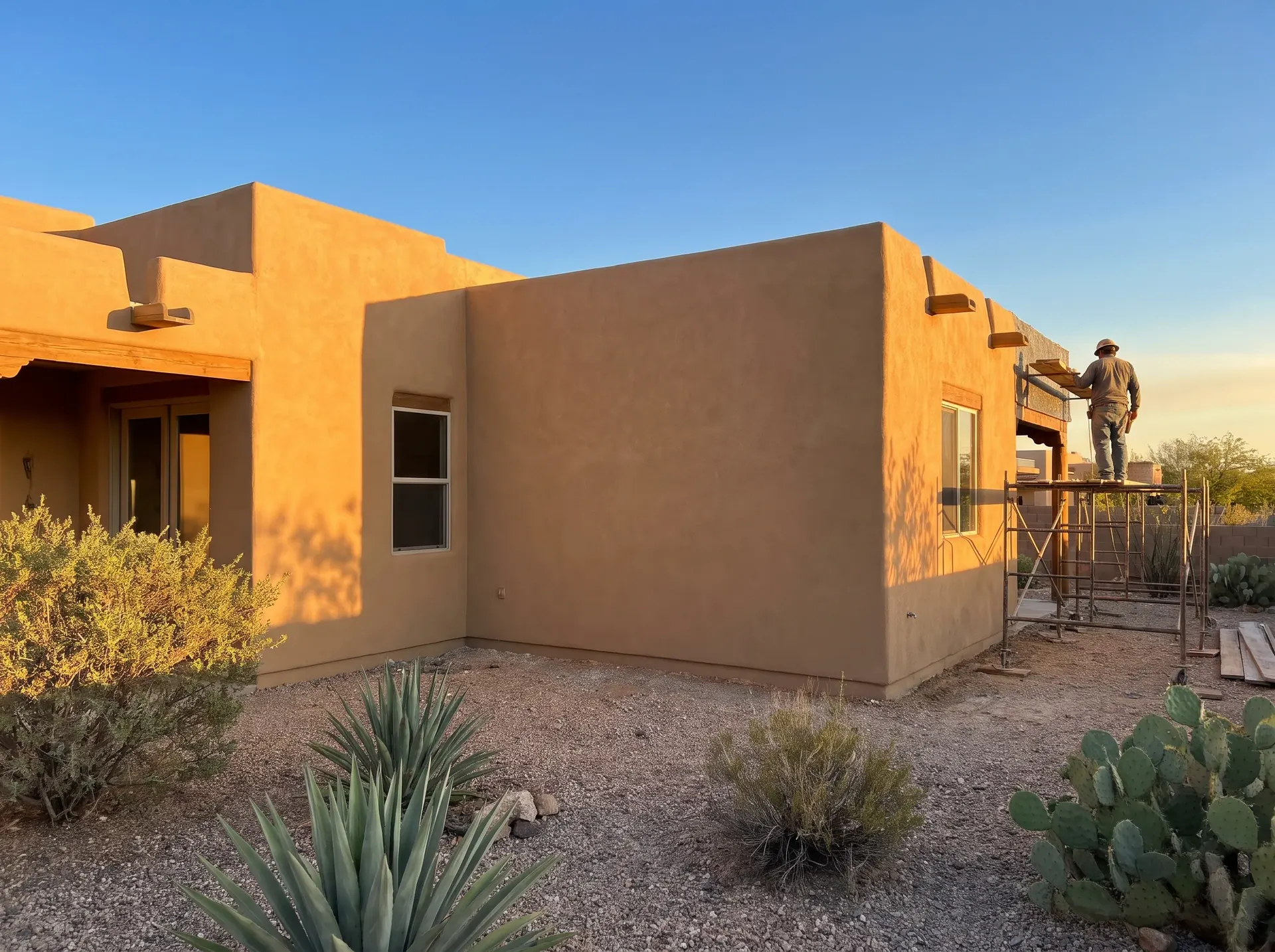
Lath, scratch, brown and finish coats for additions, garden walls and exterior upgrades on block or frame.
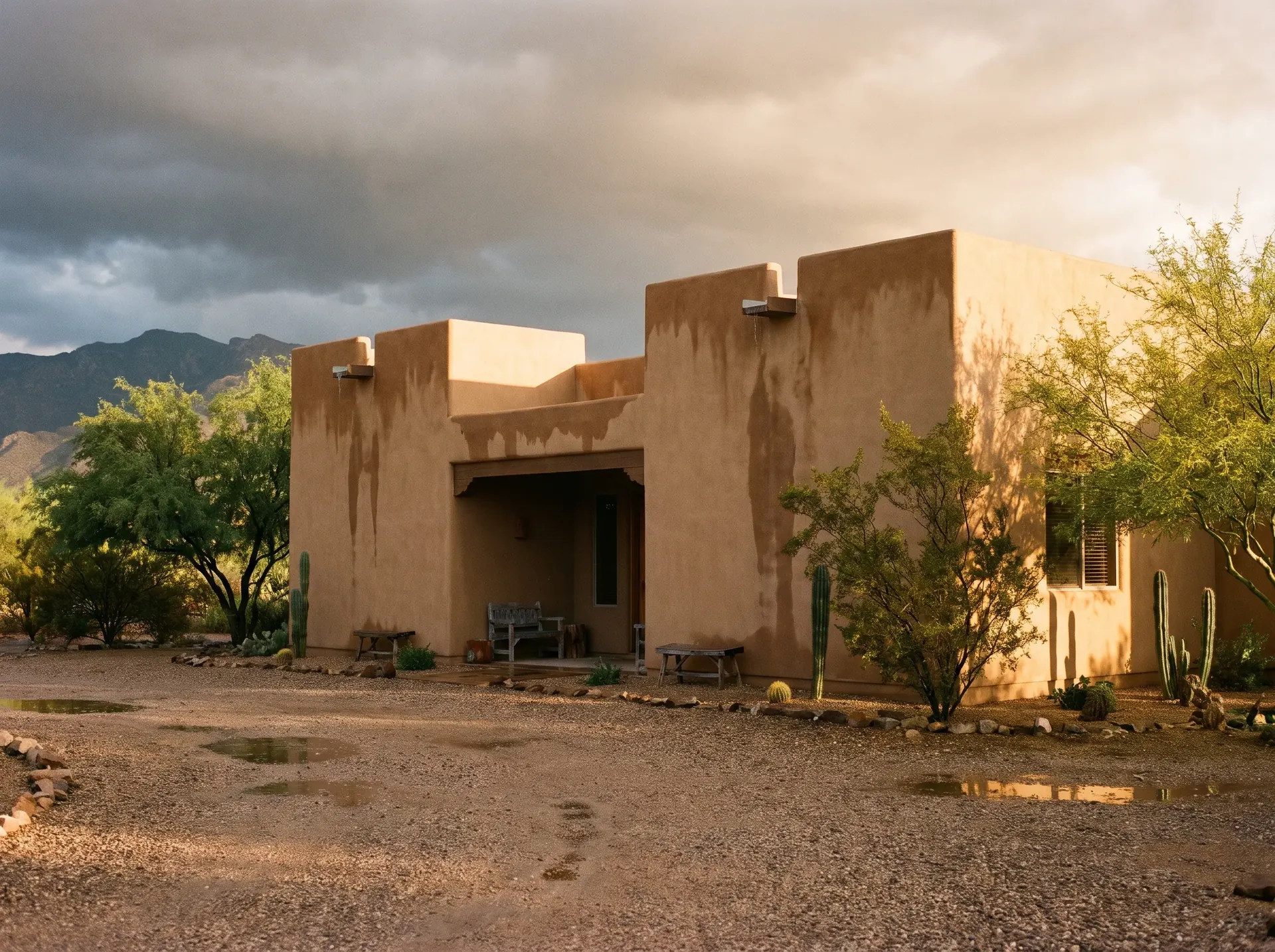
Moving cracks, parapet leaks and damp walls traced to their source and corrected from there outward.
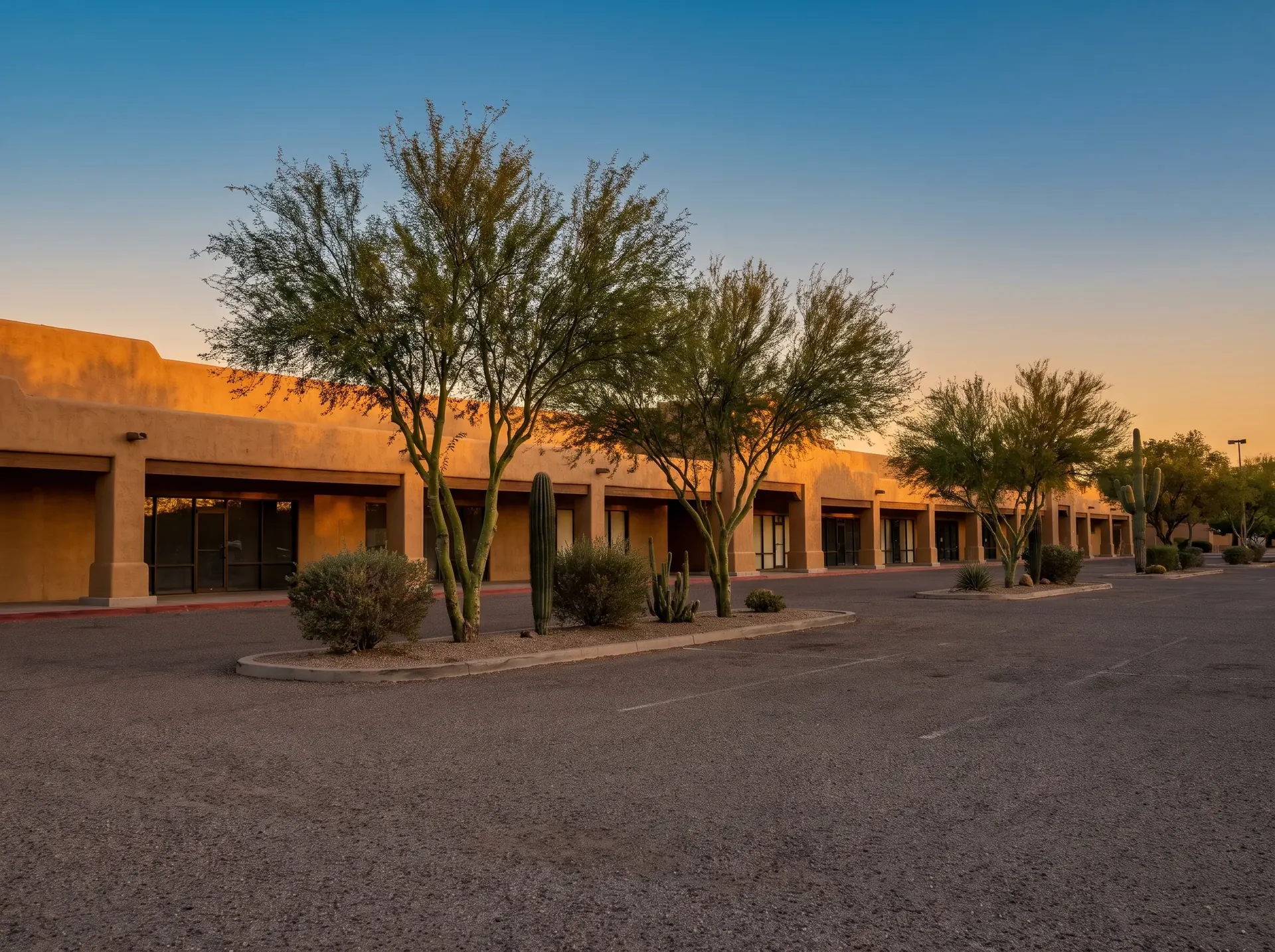
Shopping centers, offices, multifamily and HOA communities, with phasing and scope documents that suit a board or owner.
Tell us what the cracks look like and what has been on the wall before. We will check for moisture first, then give you our honest view on whether to coat.
Mon to Fri, 7am to 4pm. Saturday estimates by appointment.