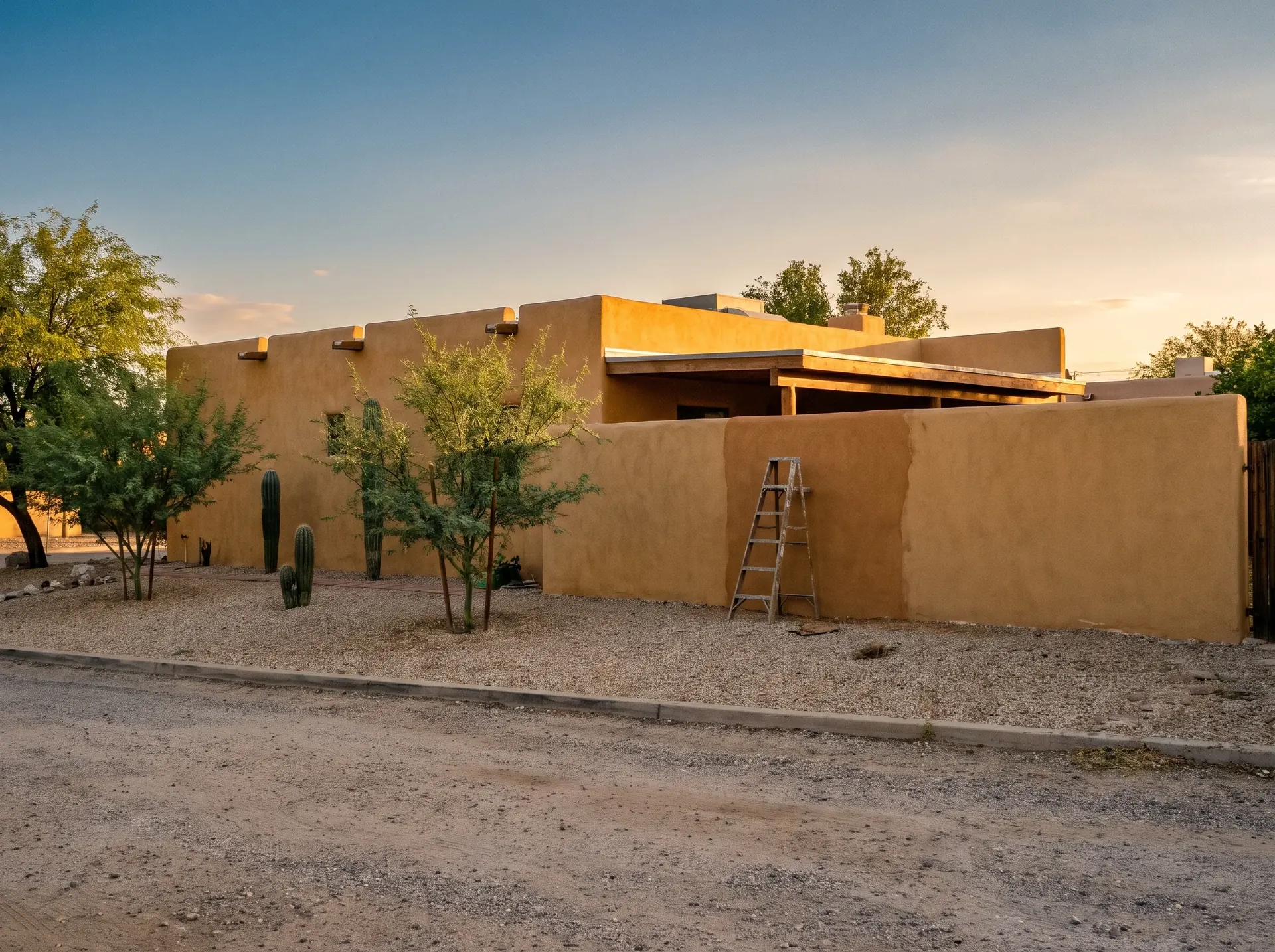
Stucco Repair
Damaged sections cut back to sound material, rebuilt in layers and blended into the finish, with the cause dealt with so the same spot does not fail twice.
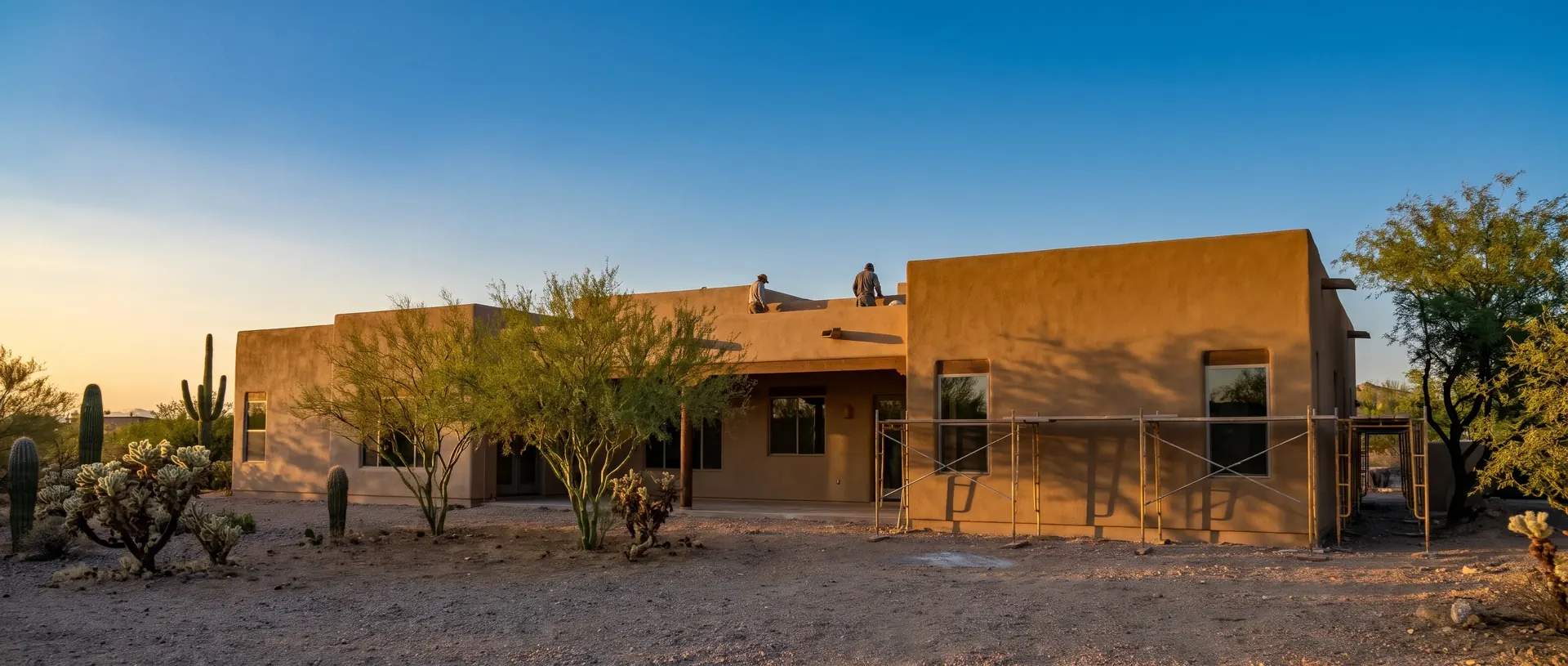
Done right, new stucco lasts decades and reads as part of the home. Most of what makes that true happens before the finish coat, in the details you will never see again.
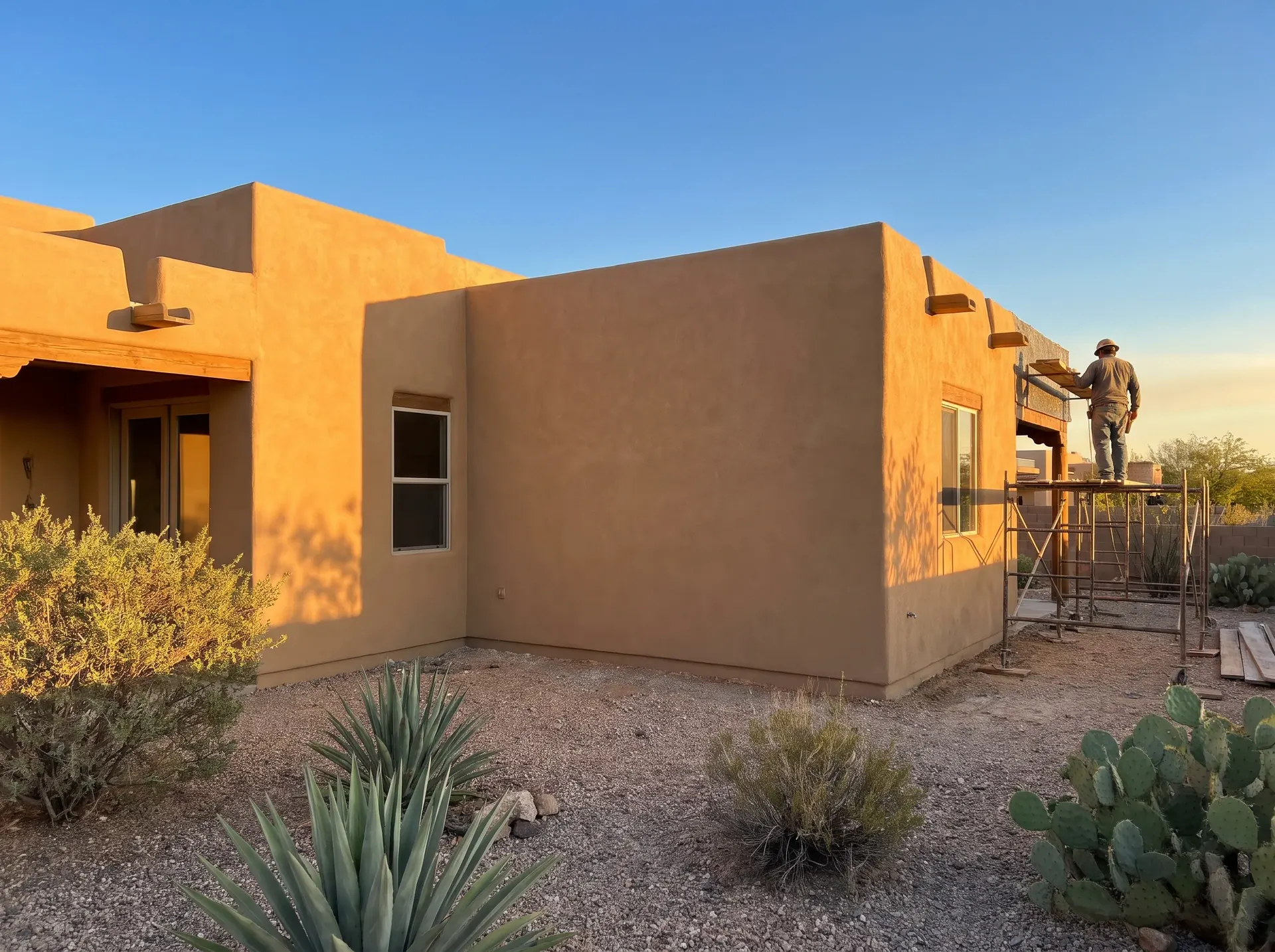
New stucco is a choice of system, not just a finish, and the right one depends on what is going underneath and what it has to tie into. Three options cover most of what we do.
Three coat stucco is the traditional build. On a frame wall, weather resistive paper and metal lath go on first, then a scratch coat, a brown coat and a finish coat. It is the thickest and most durable option, and it takes the longest because each coat needs time to cure. It is usually our first thought for an addition to an older home, where the new wall needs to sit flush with old three coat work.
One coat stucco uses a fiber reinforced base, often over foam board, and then a finish. It is thinner and quicker, and many production homes around Tucson have it. It works well when it is installed to the maker's system and suits an addition to a home already built that way. It is less forgiving of shortcuts, particularly at its thinnest points.
Stucco directly on block skips the lath and paper. A cleaned and prepared masonry wall takes base and finish coats directly, which is how most garden walls and many Tucson block homes are done. It is simple and durable, though block joints can telegraph through if the wall is not prepared and the coats are not built thick enough.
You are adding on, wrapping raw block, upgrading an exterior from another material, or building a wall that has to match the home. New work is also the right answer when a tear off has taken an old wall back to the frame.
If the existing stucco on the wall is sound, resurfacing it or adding a color coat costs far less than starting again. Before you commit to new work on an old wall, have it sounded out.
Whether your project needs a permit or an inspection depends on the scope and the jurisdiction, and additions often sit in a different category from finish work. We raise the question early, and HOA communities may also want to approve materials and color.
Stucco for a new room, casita or enclosed patio, tied into the existing wall so the new work sits flush, with matched texture and control joints where the two structures meet and will move differently.
Raw block walls wrapped in stucco to match the house, with properly detailed tops. On a Tucson garden wall, an open or poorly sealed top is where most of the later trouble starts.
Moving a home away from aging siding, wrapping a raw block wall, adding foam or trim bands, or giving a plain home a more settled Santa Fe or Territorial look with parapet detail and texture.
Frame, block or a mix of the two. We check what is there and how the new work has to meet existing walls, doors, windows, roof lines and the ground.
Three coat, one coat or direct to block, with the reasons for our choice and a comparison on cost, thickness, schedule and how each will look against the existing home.
Weep screed location, control joint layout, flashing at windows and roof transitions, and how the top of each parapet or wall gets capped. These decisions set how long the wall lasts.
What goes on in what order, curing time, what you or other trades need to have finished first, and any permit or HOA step we would raise with you.
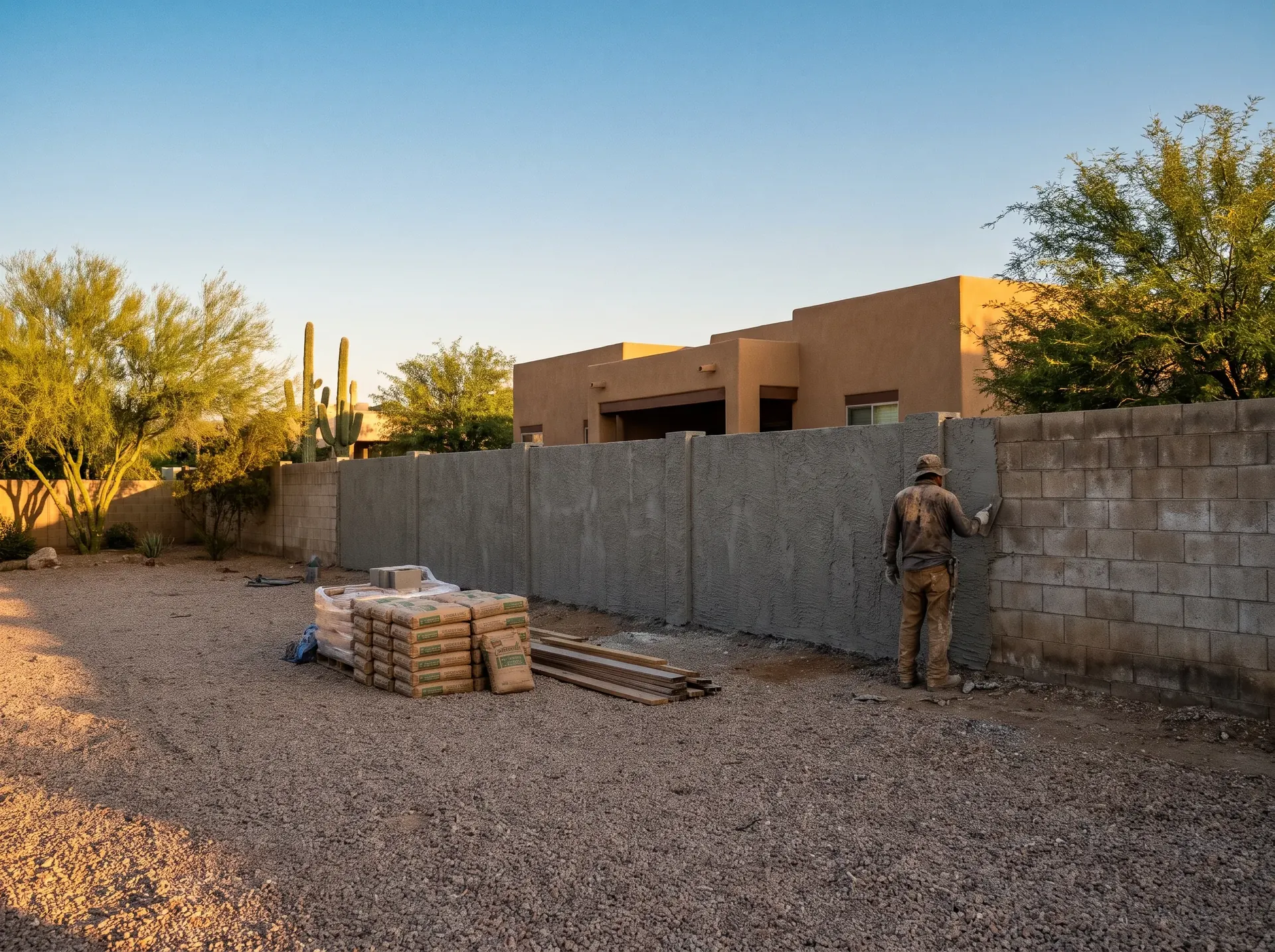
On frame, we install weather resistive paper, lapped to shed water, and flashing at openings. On block, we clean and dampen the wall and apply a bonding treatment if the surface needs it.
Metal lath goes on with the correct fasteners and laps. Weep screed goes at the base of frame walls to let water out, kept clear of soil. Corner bead and control joints come next.
The first coat is pressed into the lath and raked to give the next coat something to grip. It is kept damp as it cures, and in Tucson that often means misting more than once.
The brown coat brings the wall to its final plane. Most of the flatness in the finished job comes from here, so we check it with a straightedge rather than by eye.
Cement or acrylic finish goes on in your chosen texture and color, run corner to corner. We schedule long walls to stay out of the direct afternoon sun.
We go over the wall with you and check that the weep screed and joints are clear. If you plan to paint rather than use a color finish, we let you know how long the wall needs first.
Because the hidden layers are the ones that count. Lapped paper, correct lath, clear weep screeds and flashing at openings are not visible once the finish is on, and they are the reason a wall sheds water for decades rather than holding it.
Because we plan for how buildings move here. Caliche and clay soil shift, new foundations settle differently from old ones, and walls grow and shrink in the heat. Control joints in the right places give that movement somewhere to go.
And because we build for the wall next to it. An addition that looks added on is a disappointment, so we think through texture and color with the existing home in mind from the start.
Tell us what you are building and where it is up to. The earlier we see it, the easier it is to get the details right.
On a frame wall, usually metal lath, one or two layers of weather resistive paper, and then sheathing and studs. One coat systems often have foam board behind the base coat. On a block wall, there may be nothing but the masonry itself. Knowing which you have matters, because it changes how a wall should be repaired.
No. Frame wall stucco should finish at a weep screed that sits clear of soil and gravel, so water behind it can drain out and ground moisture stays out. Stucco buried in dirt or gravel wicks up water and salts, and also gives pests a hidden way in. If yours is buried, pull the grade back from the wall.
Traditional stucco is a mix of portland cement, sand, water and often lime, so it is mostly cement based. One coat products add fibers and polymers, and acrylic finishes contain no cement at all. Synthetic stucco systems are a different thing again, built with foam and acrylic layers. They look alike and behave differently.
A well built cement stucco wall can last fifty years or longer, and foam and acrylic systems depend heavily on how well they are detailed. Expect to renew the finish long before that. In Tucson, the sun wears the surface, while water at the top or bottom of the wall is what tends to end the system early.
Floor area is a rough guide at best, because you pay by wall area, not floor area, and a two story or heavily cornered home has far more wall. The system, the substrate, trim, access, height, and how much tear off comes first all change the figure. We quote from measured walls in writing.
Paint on existing stucco costs far less than new stucco, and a fog coat is often cheaper still. For new walls, painted block or fiber cement siding may cost less up front in some cases. Each has its own maintenance, and block on a home that is otherwise stucco can look unfinished. It is worth comparing the lifetime cost rather than the first bill.
We install stucco in Tucson, Oro Valley, the Catalina Foothills, Marana, Sahuarita, Casas Adobes, Vail and Green Valley.
Damaged sections cut back to sound material, rebuilt in layers and blended into the finish, with the cause dealt with so the same spot does not fail twice.
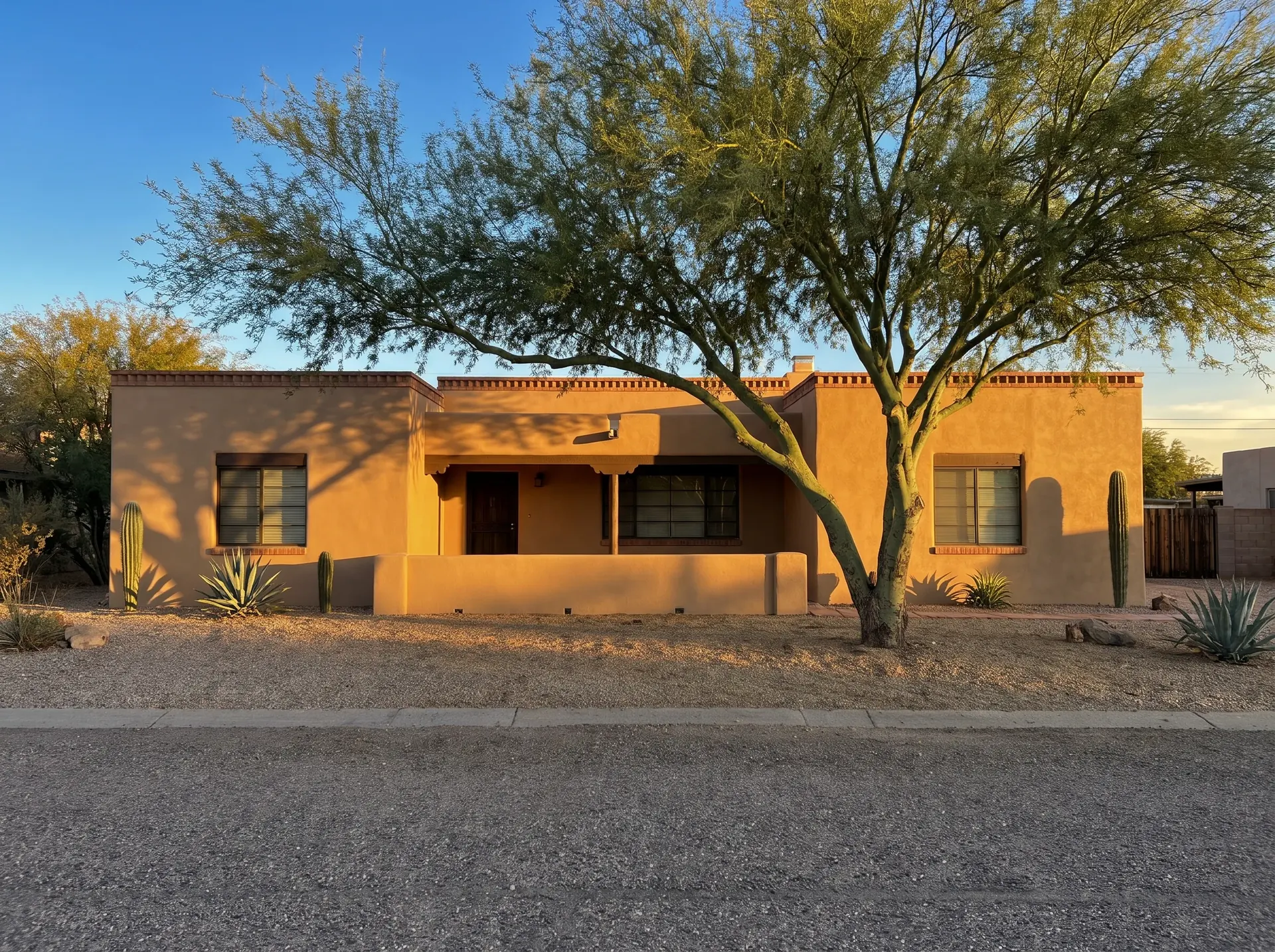
A new finish over walls that are still sound, or a tear off where the old system has failed, so the whole home reads as one surface again.
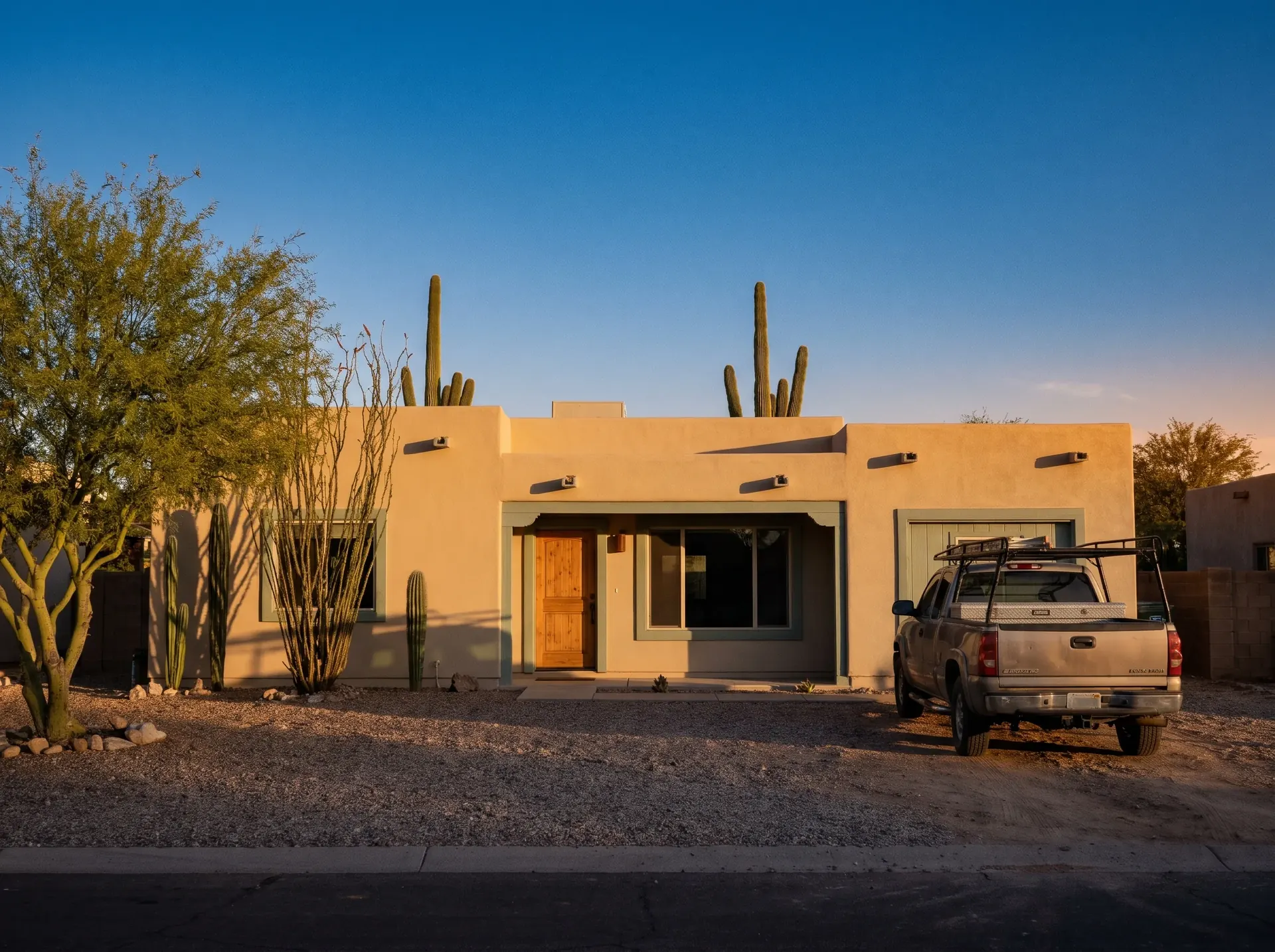
Color refreshes and full color changes using breathable coatings, with prep that deals with chalk and sun before anything goes on the wall.
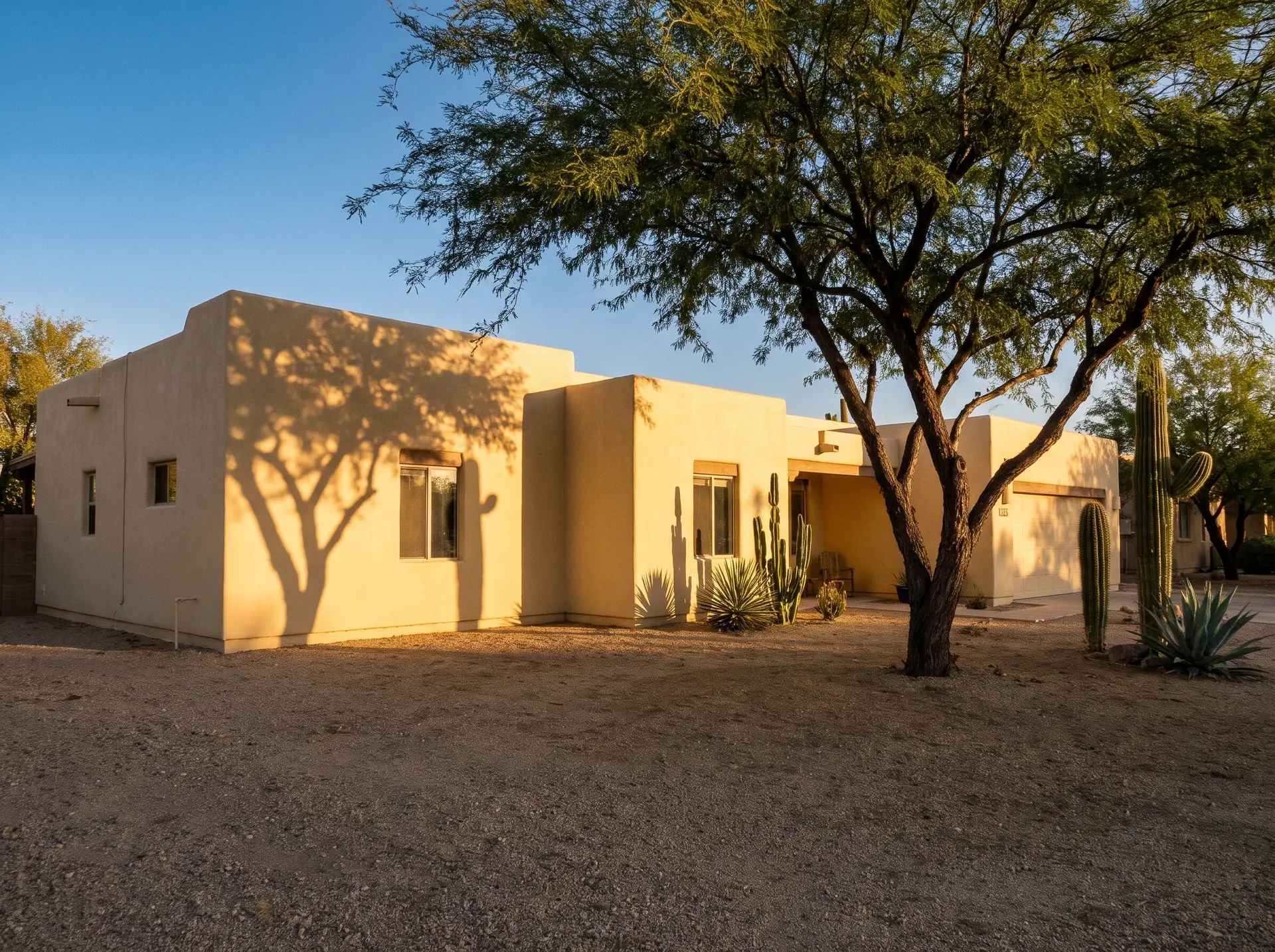
Thick, flexible coating systems for hairline cracking, along with a straight answer on the walls where they would trap moisture and do harm.
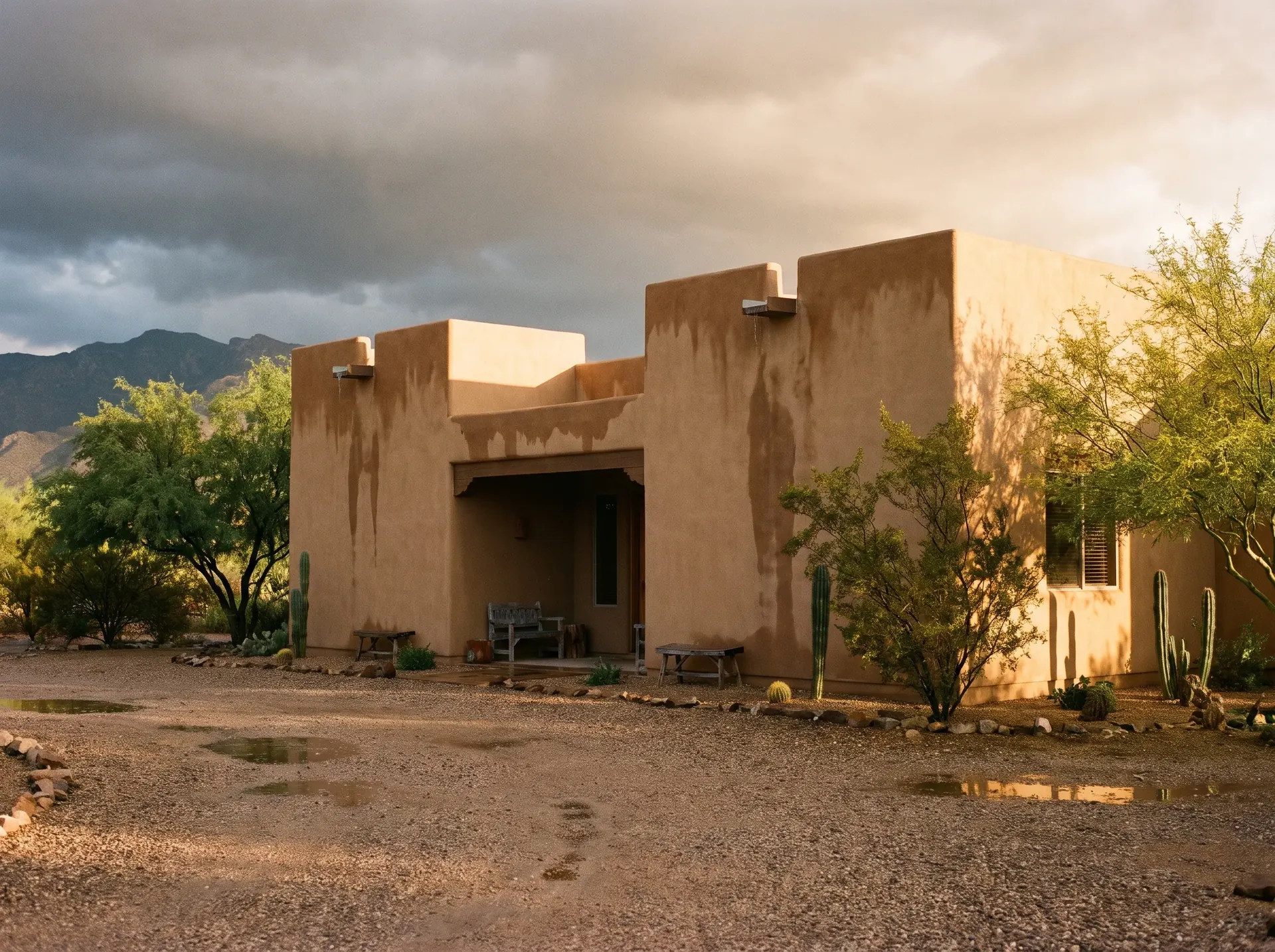
Moving cracks, parapet leaks and damp walls traced to their source and corrected from there outward.
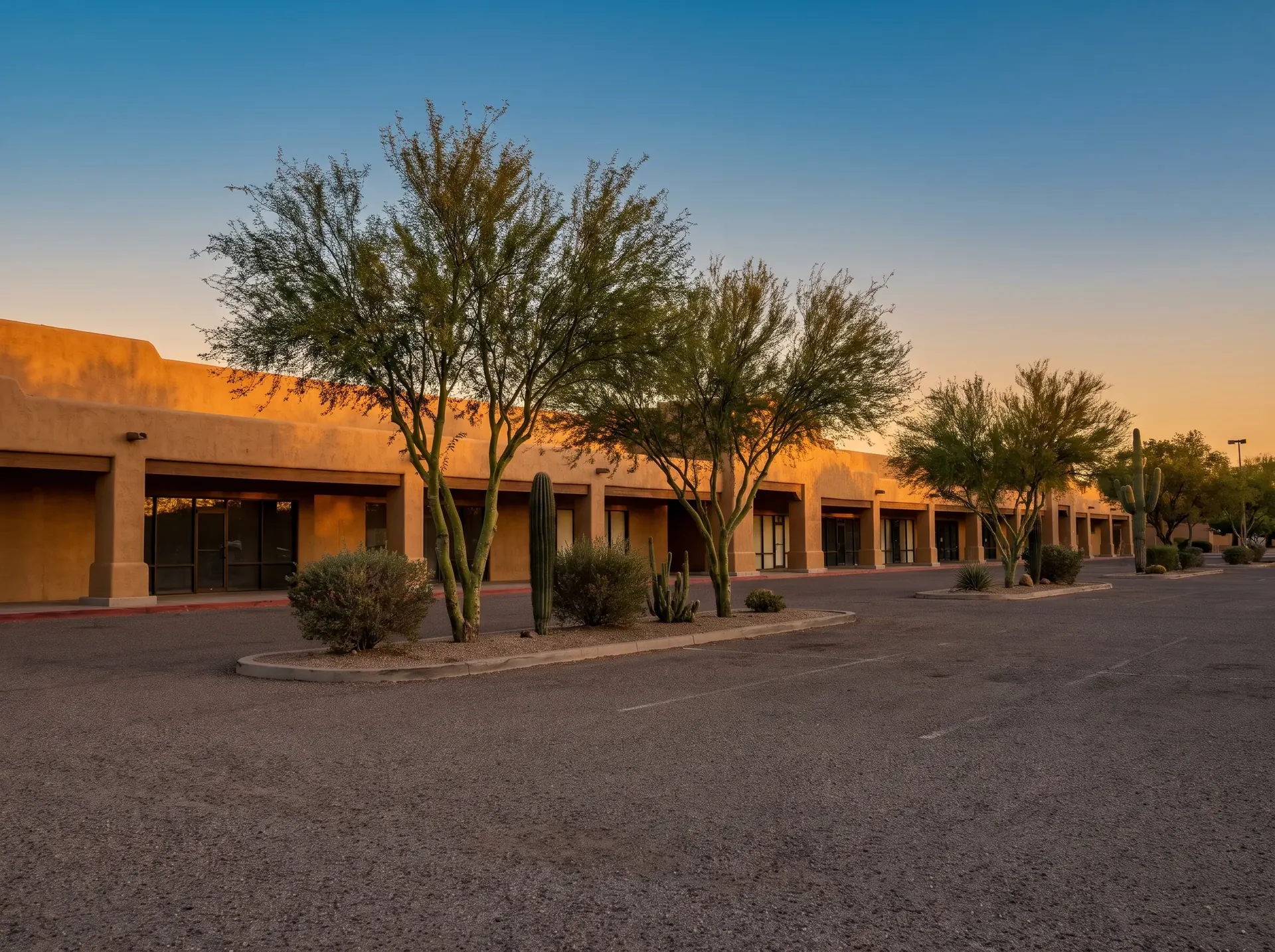
Shopping centers, offices, multifamily and HOA communities, with phasing and scope documents that suit a board or owner.
Tell us about the addition, wall or upgrade you have in mind, and any plans you already have. We will look at it and recommend the system that suits.
Mon to Fri, 7am to 4pm. Saturday estimates by appointment.